
What Progress in Child Counselling Can Actually Look Like
Published August 6, 2026 • Updated August 24, 2026
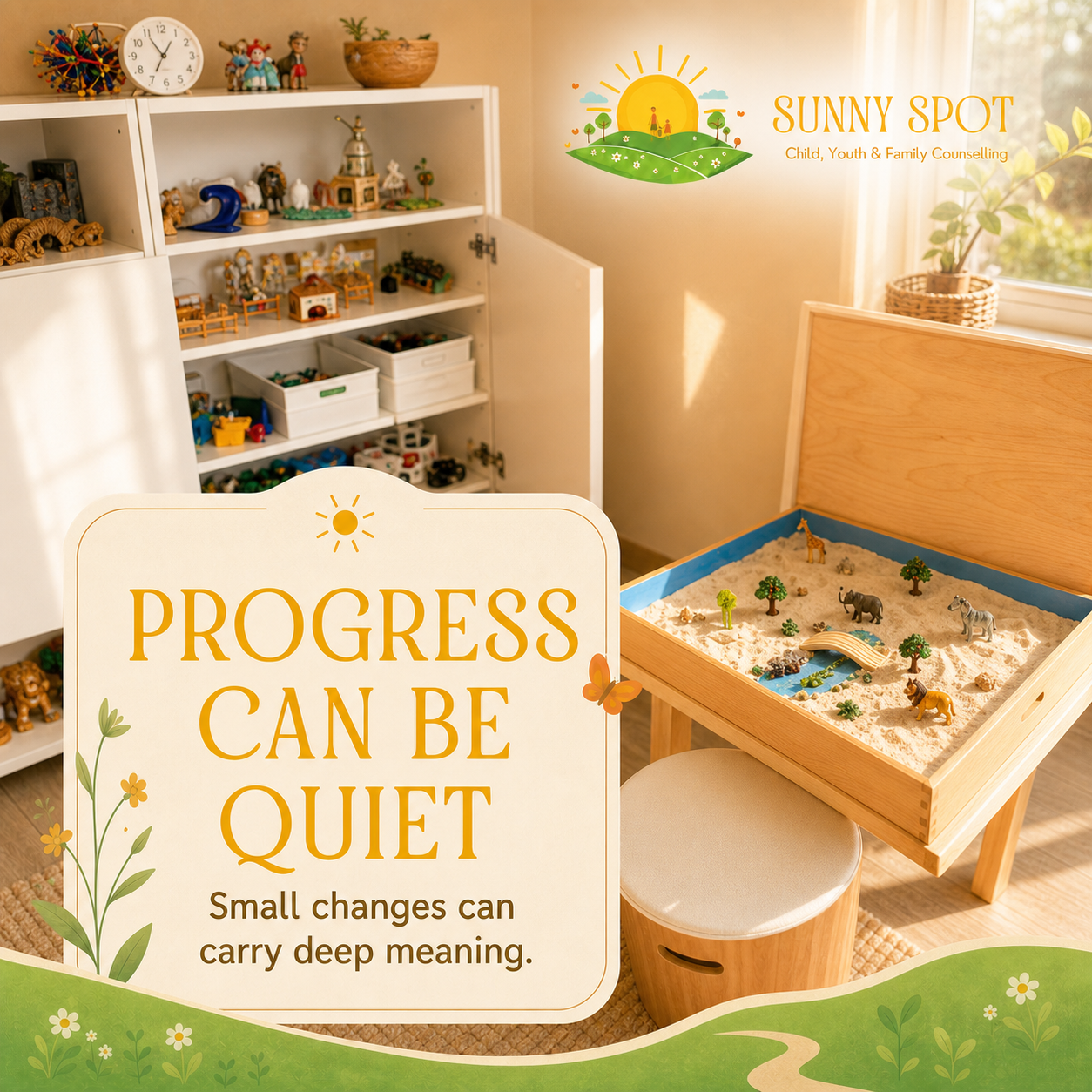
When a mother brings her child to counselling, there is usually a lot of hope underneath the worry.
You may hope the meltdowns stop. You may want school mornings to feel easier, anxiety to loosen its grip, or communication to become less painful. You may also wonder how you will know whether counselling is helping.
Progress in child counselling is not always a dramatic transformation. It is often quieter, less linear, and more human than families expect.
Progress may begin with safety
Before a child uses new coping skills or talks openly about difficult experiences, they may first need to feel safe with the counsellor and the space.
Early progress might look like entering the room with less hesitation, choosing an activity, sharing a joke, correcting the counsellor, or becoming comfortable enough to say no.
These moments can seem small, but they may show that trust is growing.
Feelings may become easier to notice
A child may begin recognizing emotions earlier. Instead of moving from calm to overwhelmed without warning, they might notice a tight chest, a busy mind, clenched hands, or the urge to hide.
They may not manage the feeling perfectly. Progress can simply mean noticing it sooner or finding one word, picture, or gesture that helps another person understand.
Recovery may become gentler
The goal is not a child who never becomes upset. Children are allowed to have powerful feelings.
Progress might mean recovering a little sooner, accepting comfort, asking for space, trying a coping tool, or reconnecting after conflict. A difficult moment may still happen, but it does not last quite as long or leave everyone feeling as disconnected.
Your child may advocate for themselves
A child might begin saying, "That is too loud," "I need a break," "Please stop," or, "Can you stay with me?"
Self advocacy is an important form of growth. It can sometimes look less compliant because the child is becoming clearer about their needs and boundaries.
Family patterns may shift
Child counselling can also support changes around the child. Parents may understand triggers more clearly, respond with greater confidence, reduce unhelpful power struggles, or repair more quickly after hard moments.
Sometimes the first meaningful change is not that the child behaves differently. It is that the family understands the behaviour differently.
Progress is not a straight line
Children may show growth in one setting before another. Stress, illness, transitions, school demands, sleep, and family changes can all affect how a child copes.
A hard week does not automatically erase previous growth. Look for patterns across time rather than expecting every day to improve.
Ask your child's counsellor what they are noticing, what goals are being supported, and how caregivers can reinforce helpful skills at home. Counselling should remain collaborative and responsive to your child and family.
Hold hope without demanding perfection
Progress may be a child who asks for help once. A mother who pauses before reacting. A repair that happens before bedtime. A feeling that finally has a name.
Small changes can create more space for safety, confidence, and connection.
Sunny Spot provides warm, relationship-first counselling for children, youth, parents, mothers, and families in Port Coquitlam and the Tri Cities.
Progress is rarely a straight line
Children may show growth in one setting before another, use a new skill for several days and then lose access during stress, or seem more emotional as they become safer expressing what they previously held in. This does not automatically mean counselling is failing. Progress needs to be understood in context, over time and alongside the child's developmental pace.
Recovery may change before the size of the feeling
A child may still have intense reactions while beginning to recover sooner, accept support earlier or reconnect with less shame. The emotion has not disappeared, but the pathway back is becoming more available. Caregivers often notice these shifts before a child can describe them.
Awareness can be progress
Noticing my stomach feels tight, I need space or I am getting too loud is meaningful even when the child cannot yet change what happens next. Awareness creates the possibility of choice. Adults can support it by noticing without praise that creates pressure: You realized your body needed a pause and told me.
Play themes and expression may evolve
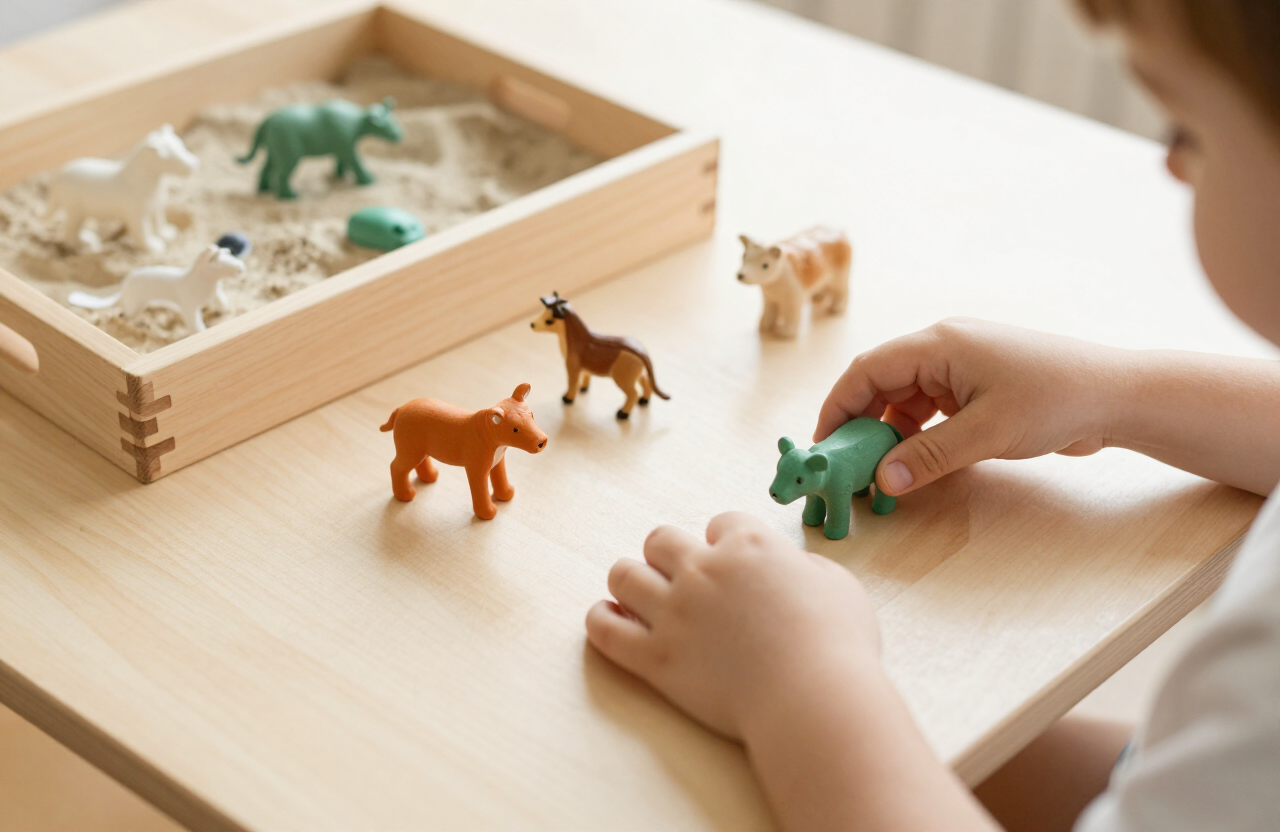
In play-based work, progress may appear through the child's stories, flexibility, ability to tolerate help, or willingness to include the counsellor. Repeated play is not necessarily stuck. Children often return to a theme while they explore control, safety, loss, fairness or repair. The counsellor considers patterns rather than interpreting one toy or scene in isolation.
Asking for help is a strength
A child who once communicated only through escalation may begin bringing a problem earlier, accepting a caregiver nearby or saying I do not know but I want help. A teen may set a privacy boundary more clearly or identify one trusted adult. These changes can look modest from the outside while representing significant relational work.
Caregiver confidence is part of progress
Child counselling does not happen in a vacuum. Progress may include a parent feeling less panicked by emotion, using fewer words in a meltdown, repairing more directly or understanding which demands exceed current capacity. A calmer adult response does not guarantee a calm child, but it can make the environment safer and more predictable.
How progress is reviewed
Useful review asks what has changed, what remains hard and whether the goals still fit the child. It should include caregiver observations, the child's voice when appropriate and information from school or other professionals only with proper consent. Avoid comparing the child with another child's timeline. The relevant comparison is the child's own functioning, comfort and participation.
When to adjust the plan
If there is no meaningful movement, the child feels unsafe or misunderstood, goals are unclear, or the support no longer fits, discuss it openly. The answer may be a different pace, more caregiver involvement, school collaboration, another approach or a referral to a different professional. Responsible counselling includes reviewing fit rather than continuing automatically.
Learn more about child counselling, play therapy and practical parent coaching. The guide to understanding play therapy explains how play can communicate change. A free 15-minute consultation can help caregivers ask what progress review may look like at Sunny Spot.
Ordinary hard days still belong
Progress does not remove grief, conflict, transitions, illness, tiredness or the normal demands of growing up. A child can be developing new capacity and still have a very hard week. Look for the broader pattern and the quality of recovery rather than using one difficult day as the verdict. Counselling should help families make sense of variability without demanding constant improvement.
A collaborative review gives families permission to name both hope and disappointment. Clear questions are welcome, and goals can change as the child grows.
The process should remain understandable to caregivers and respectful of the child.
A greater ability to repair
Progress can show up in what happens after a hard moment. A child who once shut down for the rest of the day may begin accepting a hug sooner, returning to play, or saying I was mad earlier but I am okay now. Repair is a relational skill. When a child practices it, they are learning that a rupture does not have to end connection. Caregivers often notice this change at home before it appears anywhere else.
Where change may appear first
Some shifts show up at home first. A child may recover faster after school, ask for help with a sibling conflict, or try a calming tool in the hallway. Other changes appear first in sessions, where the child feels safe enough to experiment with a counsellor before risking it with family. Neither location is more important. The counsellor and caregivers can share observations so the full picture becomes clearer over time.
How progress is discussed
Caregiver conversations with Sheila can focus on what is being noticed rather than predicting a result. You might ask: What changes are you seeing in sessions? What seems to be settling, and what still feels stuck? Are there ways we can support this at home? These conversations stay collaborative. Sheila will not promise a timeline or a guaranteed outcome, because every child moves at their own pace and progress is rarely linear.
Common questions caregivers ask
Is a setback a sign counselling is not working?
Not necessarily. A hard week after a stretch of growth can happen during transitions, illness, school stress, or family change. Look at the pattern over weeks rather than judging the process by one difficult day. If the setback lasts or feels different from before, bring it up with the counsellor so the plan can be reviewed.
How long before we see progress?
There is no fixed timeline. Some children show small shifts within a few sessions, while others need longer to feel safe before anything visible changes. The relevant comparison is your child's own baseline, not another child's schedule. Sheila can help you think about what to watch for without promising when it will appear.
For things to try at home, explore our free parent resources for big feelings and worry.
If you are curious about what progress might look like for your child, in-person child counselling at Sunny Spot's Port Coquitlam office welcomes families from Coquitlam, Port Moody and across the Tri-Cities.
Related services & support

Written by
Sheila Aini, MC, RCCRegistered Clinical Counsellor · Sunny Spot Child, Youth & Family Counselling
Sheila supports children, teens, parents and families through relationship-first, trauma-informed and neurodivergent-affirming counselling at Sunny Spot's Port Coquitlam office, welcoming families from Coquitlam, Port Moody and across the Tri-Cities.

Have Questions About Your Child?
Book a free 15-minute consultation to see if Sunny Spot is the right fit for your family.
Book a Free 15-Minute Consultation