
Play Therapy vs. Behaviour Intervention: What Is the Difference?
Published July 21, 2026 • Updated August 30, 2026
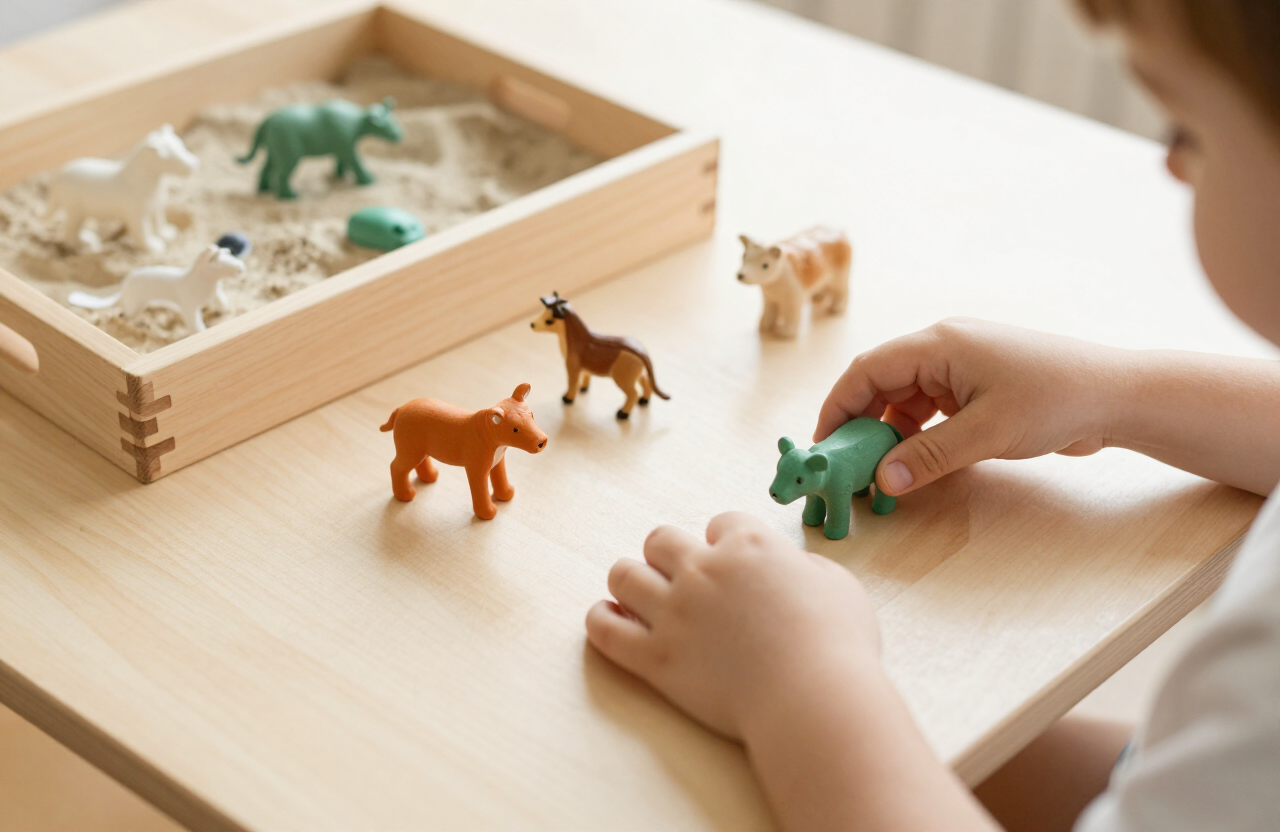
When a child is struggling, parents often come across two very different-sounding worlds: play therapy and behaviour intervention. It can feel like you are being asked to pick a side. In reality, these are not rivals, and choosing between them is rarely an either-or decision. They simply tend to ask different questions and shine a light on different parts of the same child.
What play-based counselling focuses on
Play-based counselling starts from the inside out. It asks, "What is this child feeling and experiencing, and how can we help them process it?" Because children communicate through play long before they can talk fluently about emotions, the playroom becomes a safe place to explore worries, work through hard experiences, and practise emotional regulation without pressure. The emphasis is on connection, self-expression, and the felt sense of being understood. You can read more about how this works on our page about how play therapy helps children.
What behaviour intervention focuses on
Behaviour intervention tends to start from the outside in. It looks closely at what is happening around a specific behaviour (the patterns, triggers, and responses) and asks, "What might be setting this off, and what changes could support something different?" Thoughtful behaviour work can be genuinely helpful for building skills, adjusting routines and environments, and giving families concrete strategies. You can learn more on our behaviour support page.
What your child experiences in each
From a child's point of view, the two lenses can feel quite different, though both can be warm and respectful. In play-based counselling, the child largely leads. They choose the materials, the pace, and the direction of the play, and the counsellor follows with curiosity and gentle reflection. The room is theirs to explore, and there is no agenda they have to meet.
In behaviour support, the structure is a little more shared. The adult may set up a routine, a visual schedule, or a small choice that gently guides the child toward a skill. The child still has agency and comfort, but there is more intentional shaping of the environment and the moment. Done well, this feels supportive rather than controlling, because the child's needs and preferences shape the plan rather than the plan overriding them.
Why behaviour is communication
Here is where these two worlds meet. At Sunny Spot, behaviour is never seen as "bad" or something to simply stamp out. Behaviour is communication. A meltdown, a refusal, or an outburst is often a child's way of saying something they do not yet have the words for: "I am overwhelmed," "I feel unsafe," "this is too much," or "I need connection."
When we treat behaviour as a message rather than a problem, our whole approach softens. Instead of asking only "How do we stop this?" we also ask "What is this trying to tell us?" That curiosity tends to lead to changes that last, because it addresses the need underneath the behaviour, not just the behaviour itself.
When each lens may be useful
There is no universal rule, but as a gentle guide:
- A play-based lens may be especially supportive when a child is carrying big feelings, anxiety, grief, or the effects of a hard experience.
- A behaviour lens may be especially useful when specific, repeating behaviours are getting in the way at home or school and families want practical structure and skills.
- Very often, a thoughtful blend of both serves a child best, meeting their emotional needs while also supporting concrete change.
Age and stage can shift the balance
A child's developmental stage often shapes which lens carries more weight at a given moment, though both can remain useful throughout.
Younger children, roughly three to seven, usually lean toward play-based work. They communicate through play, movement, and imagination long before they can talk fluently about feelings, so the playroom gives them a natural language. Behaviour strategies still help with routines and safety, but the emotional processing happens largely through play.
School-age children often benefit from a blend. Play remains a powerful way to explore worries and relationships, while concrete behaviour strategies can support morning routines, homework, and friendships. Many children this age enjoy having some structure alongside the freedom of play.
Teens may prefer more conversation and practical problem-solving, with creative approaches available but never forced. Some teens find drawing, writing, or hands-on activities easier than direct talking, while others want to get straight into it. Youth and teen counselling keeps the relationship central while making room for how each teen actually communicates.
These are tendencies, not rules. A sixteen-year-old may still need play, and a five-year-old may benefit from a clear visual routine. Fit follows the child, not their age alone.
How caregivers are involved in each
Caregivers matter in both approaches, but the shape of that involvement differs. With play-based counselling, caregivers usually stay close through regular check-ins, hearing themes and receiving ideas to carry home, while the details of the play stay private. The work happens mostly in the room, and you support it between sessions.
With behaviour support, caregivers are often the main agents of change, because the strategies that help a child live in daily home life. Sheila partners with you to build routines, co-regulation moves, and clear expectations you can actually use on a hard Tuesday morning. Parent coaching can sit alongside either approach when you want more focused, practical support.
A relationship-first way of bringing them together
Sheila Aini, MC, RCC, draws on years of experience in behaviour intervention alongside relationship-first, play-based counselling. Rather than treating these as separate toolkits, she weaves them together around one guiding principle: the relationship comes first. Safety and connection are the foundation, and from there, both emotional processing and practical skill-building can grow. You can read more about how she brings behaviour support into everyday play and routines on our naturalistic behaviour intervention page.
This integration is always tailored to the individual child and family, never a fixed program applied the same way to everyone. What we work toward is a child who feels understood and a family that feels more equipped and hopeful.
What neither approach is
It helps to name what thoughtful play-based work and thoughtful behaviour support are not. Neither is about controlling a child, enforcing compliance, or making a child appear less like themselves. Compliance-based methods that rely on punishment, shame, or suppressing a child's natural ways of being are not what Sunny Spot offers. A child who stims, who has a special interest, or who communicates differently is not asked to mask those parts of themselves in order to be supported.
Both approaches, done well, start from respect. They ask what a child needs, what a behaviour is communicating, and how the adults around them can adjust. The goal is not a quieter, more compliant child. It is a child who feels understood, safe, and increasingly able to move through their world with support that fits who they are.
When you hear the words behaviour intervention, it is fair to ask what a provider means by it. At Sunny Spot, behaviour support is always relationship-first and neurodivergent-affirming, woven into counselling rather than delivered as a standalone program.
How fit is decided together
You do not have to arrive knowing which approach your child needs. That question is part of the conversation. In a consultation, Sheila listens to what you are seeing, what matters to your family, and what your child responds to, and then talks openly about what might fit and why. Fit is not a label assigned to your child. It is a working sense that can shift as your child grows and as circumstances change.
Finding the right fit for your child
You do not need to figure out which approach your child needs before reaching out. That is exactly what the first conversations are for. A free 15-minute consultation is a relaxed way to talk through what you are noticing and explore what might help. You can also learn more about relationship-first child counselling in Port Coquitlam or read about our behaviour support.
To go deeper on the play-based side, understanding play therapy explains why play is meaningful communication for children.
This article offers general information and is not a substitute for individualized care. The best approach for your child depends on their unique needs, which can be explored together.
For things to try at home, explore our free parent resources for big feelings and behaviour.
To explore whether play therapy, behaviour intervention or a combined approach fits your child, in-person support at Sunny Spot's Port Coquitlam office welcomes families from Coquitlam, Port Moody and across the Tri-Cities.
Related services & support

Written by
Sheila Aini, MC, RCCRegistered Clinical Counsellor · Sunny Spot Child, Youth & Family Counselling
Sheila supports children, teens, parents and families through relationship-first, trauma-informed and neurodivergent-affirming counselling at Sunny Spot's Port Coquitlam office, welcoming families from Coquitlam, Port Moody and across the Tri-Cities.

Have Questions About Your Child?
Book a free 15-minute consultation to see if Sunny Spot is the right fit for your family.
Book a Free 15-Minute Consultation