
How Do I Know if My Child Needs Counselling?
Published July 21, 2026 • Updated August 23, 2026
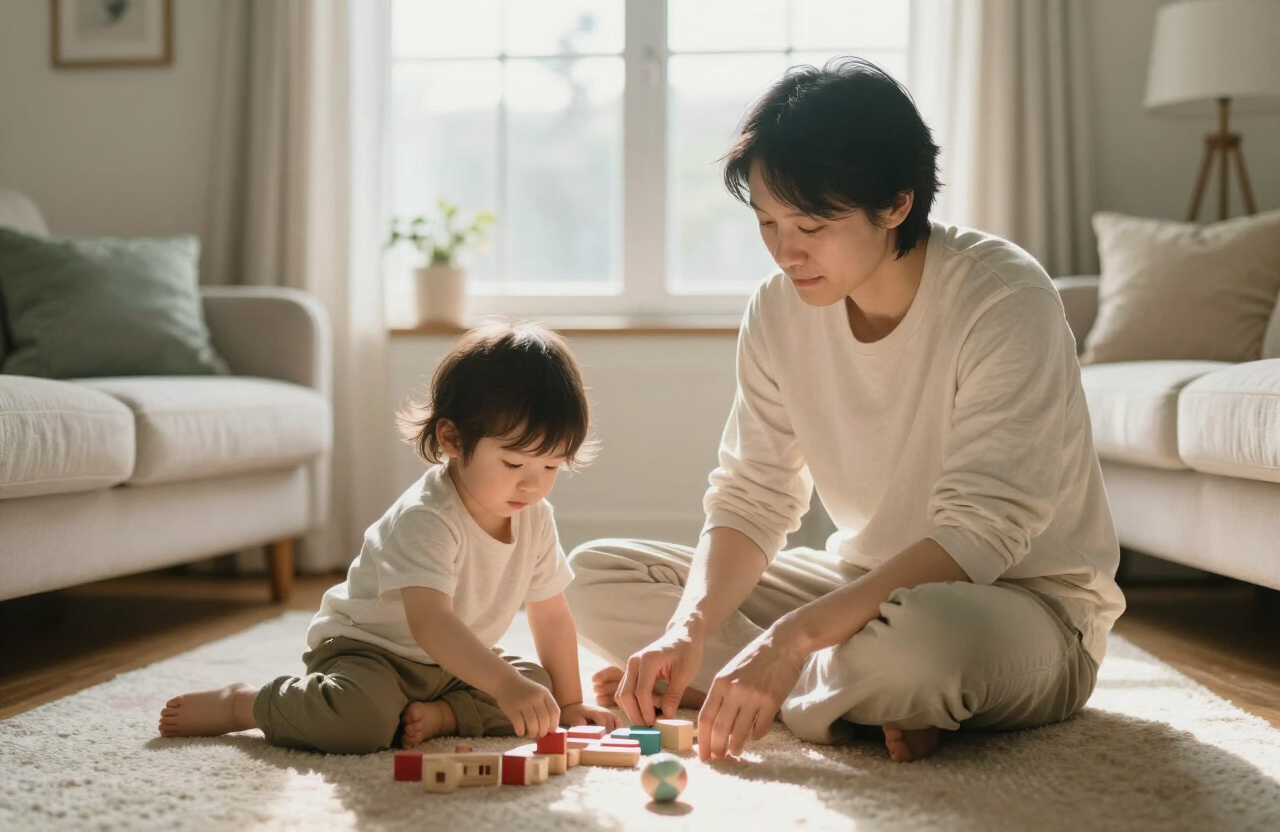
If you have found yourself lying awake wondering whether your child could use a little extra support, you are already doing something loving: paying attention. This is one of the most common questions parents bring to Sunny Spot, and there is rarely a simple yes-or-no answer. Children are always growing and changing, and hard days are part of a healthy childhood. So how do you tell the difference between an ordinary rough patch and something worth a second look?
A pattern matters more than one hard day
Every child has days when they fall apart over the wrong colour cup, refuse to go to school, or melt down at bedtime. One hard day, or even one hard week, is usually just life. What tends to be more meaningful is a pattern: a change that lingers for several weeks, shows up in more than one part of your child's world, and feels different from their usual ups and downs.
A helpful question to ask yourself is not "Is my child struggling right now?" but "Is this getting in the way of my child being able to learn, connect, and enjoy the things they usually love?" When the answer leans toward yes, and it has been going on for a while, that is often a good moment to reach out.
Changes worth gently noticing
Children rarely announce that they are struggling. Instead, distress tends to leak out sideways: through their bodies, their behaviour, and their play. You might notice shifts such as:
- Sleep changes: trouble falling asleep, nightmares, or wanting to co-sleep again
- School changes: reluctance to go, big feelings on school mornings, or a drop in engagement
- Play changes: repetitive or aggressive play, or losing interest in play altogether
- Friendship changes: pulling away from friends, conflict, or new loneliness
- Behaviour changes: more meltdowns, defiance, clinginess, or withdrawal than usual
- Body complaints: frequent tummy aches or headaches with no clear medical cause
None of these on their own means something is wrong. Bodies and behaviour are simply honest messengers. When several of these shifts cluster together and stick around, they may be your child's way of saying, "This is a lot, and I could use some help carrying it."
A hard season versus ongoing strain
Not every difficult stretch means a child needs counselling. A new baby, a house move, the start of a new school year, or a bout of illness can all stir up weeks of tricky behaviour even in a child who is coping well overall. During a hard season, extra patience, predictable routines, and a little more connection at home are often enough to carry a family through.
What tends to distinguish ongoing strain is that the changes do not ease once the situation settles. Weeks pass, the move is behind you, the new baby is sleeping more, and yet your child still seems off. They are quicker to tears, slower to recover, or more withdrawn than the version of them you know. When the difficulty outlasts the trigger, or when there was no clear trigger at all, that is often a sign the nervous system is carrying something it would benefit from help to process.
Times when it makes sense to reach out sooner
Some situations are worth support even without a long list of symptoms, for example, when a family is moving through big change such as separation, a loss, a new sibling, illness, or a frightening experience. Extra support during these seasons is not a sign that anything has gone wrong; it is simply good care.
There are also moments that call for prompt attention. If your child talks about not wanting to be here, hurts themselves, or you feel genuinely worried about their safety, please do not wait. Contact your family doctor, a local crisis line, or emergency services right away. Counselling is a wonderful support for many things, but immediate safety concerns need immediate help.
How to start the conversation with your child
Many parents worry that raising the idea of counselling will scare their child or make them feel like something is wrong with them. The good news is that how you frame it makes all the difference. Keep it warm, simple, and free of pressure.
- Normalize it: "Lots of kids have a special person they talk and play with when things feel big."
- Focus on connection, not fixing: "This is someone whose whole job is to get to know you and help our family."
- Emphasize play: for younger children, "You will get to play, draw, and use your imagination."
- Reassure them they are not in trouble and nothing about them is broken.
You do not need to have the perfect words. Your calm, matter-of-fact tone tells your child more than any script. It says this is safe, and you are not alone.
When parent consultation may be the right starting point
Sometimes the most useful first step is not a session for your child at all. If you are unsure whether counselling is warranted, or if your child is very young and most of the struggle is showing up at home, a parent consultation can be enough on its own. You and Sheila can look together at what you are seeing, what might be underneath it, and what small shifts at home could help. For many families, this kind of focused conversation brings real relief and clarity without ever needing to bring the child into the room.
Parent consultation is also a gentle way to begin when your child is nervous, resistant, or not yet ready to meet someone new. You can gather guidance and a plan while giving your child time to warm to the idea.
What a consultation can clarify
A free 15-minute consultation is not an assessment or a commitment. It is a short, relaxed conversation where you can share what is on your mind and ask whatever you need to. From that talk, a few things often become clearer: whether what you are noticing fits the kind of support Sunny Spot offers, whether now is the right time, and what a sensible next step might look like for your particular family. Sometimes the answer is counselling. Sometimes it is parent support. Sometimes it is simply reassurance that what you are seeing is developmentally typical. Any of those outcomes is a good outcome.
What a first step can look like
Reaching out does not commit you to anything. At Sunny Spot, a gentle way to begin is a free 15-minute consultation, a relaxed conversation where you can share what you are noticing and ask whatever is on your mind. It is a chance to get a feel for whether counselling might be a good fit before making any decisions.
If you would like to keep exploring, you can read more about relationship-first child counselling in Port Coquitlam, learn how parent coaching can support you directly, or browse common questions on our FAQ page. Trusting your instincts as a parent is enough of a reason to ask for support.
When you feel ready to talk with your child about starting, our guide on how to introduce counselling to your child walks through that conversation in plain language. And if you have been waiting for things to feel serious enough, you may find it helpful to read why you do not need to be in crisis to ask for support.
This article offers general information and is not a substitute for individualized care. Every child and family is unique, and a consultation is the best way to explore what support may be right for yours.
For things to try at home, explore our free parent resources for big feelings and worry.
When you are weighing whether your child may benefit from support, in-person child and teen counselling at Sunny Spot's Port Coquitlam office welcomes families from Coquitlam, Port Moody and across the Tri-Cities.
Related services & support

Written by
Sheila Aini, MC, RCCRegistered Clinical Counsellor · Sunny Spot Child, Youth & Family Counselling
Sheila supports children, teens, parents and families through relationship-first, trauma-informed and neurodivergent-affirming counselling at Sunny Spot's Port Coquitlam office, welcoming families from Coquitlam, Port Moody and across the Tri-Cities.
Have Questions About Your Child?
Book a free 15-minute consultation to see if Sunny Spot is the right fit for your family.
Book a Free 15-Minute Consultation