
Ten Minutes of Connection Can Matter
Published August 5, 2026 • Updated August 24, 2026
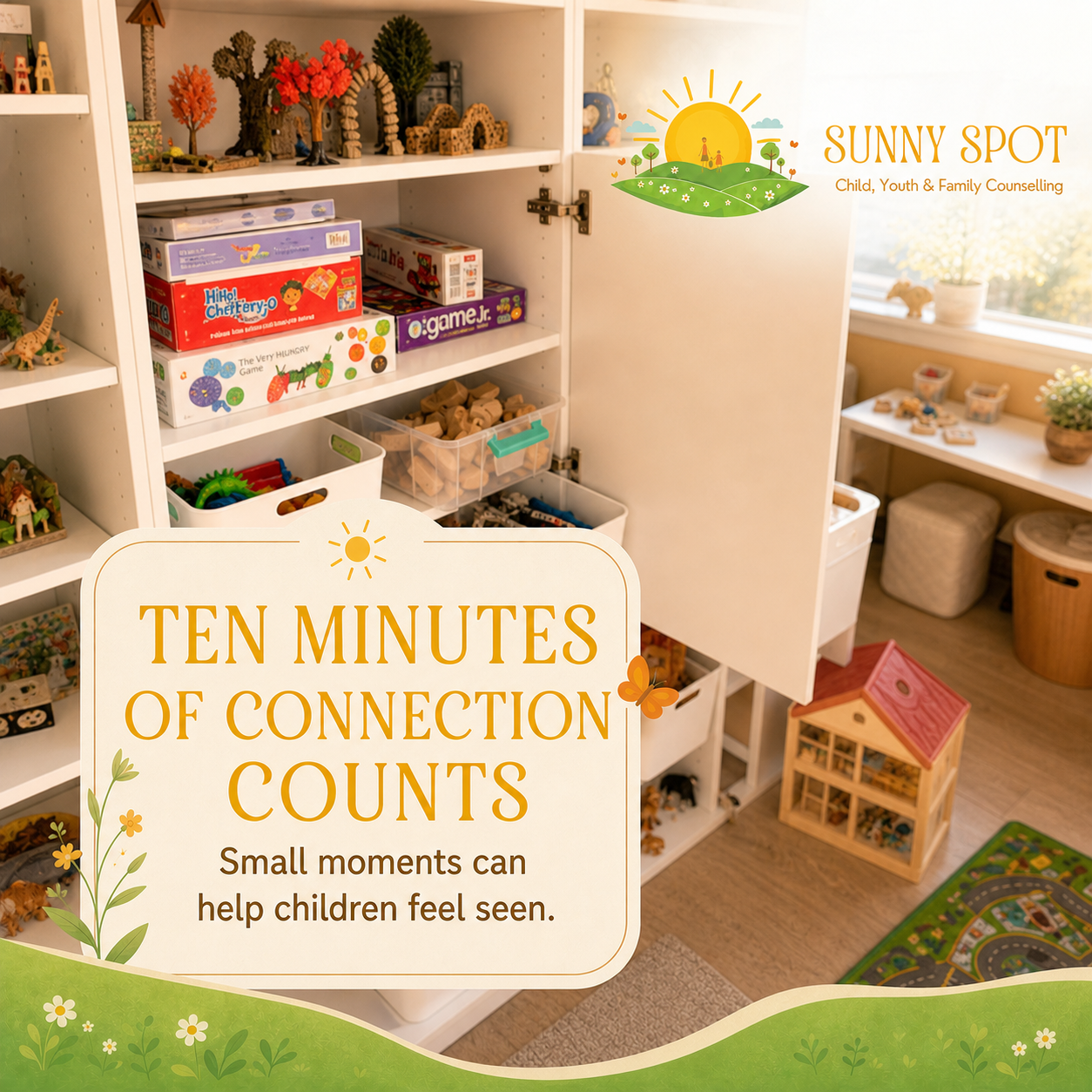
Many mothers carry a quiet fear that they are not giving their children enough.
Not enough attention. Not enough patience. Not enough meaningful time. The day fills with work, school, meals, driving, activities, messages, appointments, laundry, and bedtime. Then the guilt arrives and suggests that connection requires a beautiful craft, a special outing, or an uninterrupted afternoon.
It does not.
Connection can happen in ten ordinary minutes.
Connection is about presence, not performance
Children often remember how it felt to be with us more than what we planned. They notice when we soften our voice, become curious about their world, laugh with them, or let them lead for a few minutes.
Ten minutes will not solve every problem, but a small pocket of reliable attention can tell a child, "You matter to me. I enjoy being with you. There is room for your world here."
Let your child lead
Set a short amount of time and allow your child to choose the activity. You might build, draw, kick a ball, listen to a song, look at rocks, or hear a detailed explanation about a favourite game.
Try to resist teaching, correcting, or improving the activity. Follow their ideas. Notice what they are doing. Say things like, "You worked hard on that," or, "Tell me what happens next."
Use moments that already exist
Connection does not always need its own place on the calendar. It can happen while you are driving, brushing hair, folding laundry, eating a snack, walking to the car, or sitting on the edge of the bed.
Try one small ritual your child can expect. It might be a silly question at breakfast, one song in the car, a two minute cuddle before school, or sharing one good thing and one hard thing at bedtime.
Predictability often matters more than length.
Put the phone down for one pocket of time
Mothers need phones for work, schedules, school messages, maps, family communication, and a thousand invisible tasks. This is not about shame.
Choose one short pocket of time when the phone can be out of reach. Let your child see that, for these few minutes, they have your attention.
Repair counts as connection too
You will be distracted sometimes. You will be impatient. There will be evenings when connection feels impossible.
Repair can sound like, "I was rushing and I did not listen well. Can we try again?" A sincere return teaches children that relationships can recover after difficult moments.
A gentler measure for mothers
Instead of asking, "Did I do enough today?" try asking, "Was there one moment when my child felt seen?"
Maybe it was a smile across the room. Maybe you remembered the name of a character. Maybe you sat beside them while they cried. Maybe you laughed together while looking for a missing shoe.
Small moments are still real moments. They count.
Sunny Spot offers compassionate counselling for children, youth, mothers, parents, and families in Port Coquitlam and the Tri Cities.
Why brief and reliable can be meaningful
Ten minutes is not a treatment and it will not solve anxiety, conflict or complex family stress. What a short, reliable period can offer is a clear signal: for this moment, you do not need to compete with chores, a phone or a sibling for my attention. Predictability can lower pressure for both child and caregiver because connection does not depend on finding a perfect free afternoon.
Let the child lead the activity
Child-led means the caregiver follows the child's safe idea without teaching, improving or taking over. A preschooler may want the same pretend scene repeated. A school-aged child may build, draw or show a collection. A teen may share a song, clip, game or snack. Interest matters more than novelty.
The adult still holds safety and time boundaries. You can say: We have ten minutes. You choose between these safe options, and I will tell you when two minutes are left. Keeping the ending predictable protects trust.
What to do during the ten minutes
- Put the phone out of reach when possible.
- Describe or notice more than you question.
- Follow the child's pace instead of directing the outcome.
- Allow quiet without filling it.
- End with a clear appreciation of the time together.
Try comments such as You worked hard to balance that, You want me to be the dragon, or I like being here with you. Avoid turning the activity into a quiz, a lesson or a disguised conversation about behaviour. The aim is shared attention.
Examples for different ages
With a younger child, build a small tower, colour side by side or join their pretend play. With an older child, shoot baskets, make a snack or let them explain a favourite topic. With a teen, sit nearby while they choose music, take a brief drive or invite them to show one thing they are enjoying. If they decline, respect the no and offer again another day without guilt.
When a busy family cannot do it every day
Consistency does not have to mean daily. Choose a rhythm the caregiver can actually keep, such as three evenings a week or Sunday morning. If the plan is missed, do not abandon it or promise a larger make-up event. Repair simply: We missed our time yesterday. I am sorry. Let us choose the next time now.
Do not use connection as a reward
Children should not have to earn relational time through compliance. If connection is removed after a hard day, a child may hear that belonging depends on being easy. Limits and consequences may still be necessary, but preserve a path back to relationship. The child-led time can be shorter during a difficult day if capacity is low, but avoid using its loss as punishment.
Notice what changes without demanding a result
The value may appear in small ways: a child begins bringing you ideas, transitions out of play with slightly more trust, or shares something while your hands are busy together. There may also be no visible change. Keep the practice because it supports relationship, not because the child must produce better behaviour afterward.
For more ideas, explore Sunny Spot's parent coaching and family counselling. Read about counselling that fits real family life and why it can help to let a child's story land before offering advice. A free 15-minute consultation is available if your family wants individualized support.
Connection is not a test of the caregiver
Some days a caregiver will be distracted, tired or unable to enjoy the activity. You do not need to perform perfect delight. Be honest and bounded: My energy is low, but I can sit with you for five minutes and watch. A smaller genuine offer is more trustworthy than promising attention you cannot sustain. If irritation takes over, pause and repair rather than forcing the moment.
Reliable warmth matters more than a perfect activity.
Side-by-side time with teens
Teens often open up more when they do not have to make eye contact across a table. A short drive, walking the dog, building something, or sitting on the floor while they show you a game can lower the pressure. Let them choose the activity and control how much they share. You might say: I have ten minutes before I start dinner. Want company, or do you want the room to yourself? If they want company, follow their lead. If they want space, respect it and offer again another day.
When your child does not want to participate
Some days a child will say no, walk away, or seem uninterested. That is not a sign the practice has failed. A genuine offer still communicates care. Try: No problem. I am around if you want company later. Avoid turning the no into a negotiation or making the child feel guilty for declining. Connection offered without pressure is often what makes a child reach for it next time.
When ten minutes is not enough
Brief, reliable connection supports a relationship, but it is not a substitute for individualized support when a larger concern is present. If your child is withdrawing from activities they once enjoyed, struggling to attend school, showing lasting changes in sleep or mood, or if conflict at home feels unsafe, ten minutes of warmth will not be enough on its own. General education can help a family stay connected while you consider next steps. Counselling can help when a pattern is lasting, intense, or interfering with daily life.
Common questions caregivers ask
Does it have to be exactly ten minutes?
No. Ten minutes is a realistic starting point, not a rule. Five honest minutes count. So does a longer stretch when the family has the capacity. The aim is a pocket of attention that fits your real life and can be repeated.
What if I miss several days in a row?
Begin again without making it a big event. Say: We have not had our time lately, and I missed it. Let us pick a day this week. Repairing the gap teaches children that connection can restart after a pause, which is a more useful lesson than never missing a day.
For things to try at home, explore our free practical parent resources for connection at home.
If you would like support strengthening everyday connection with your child, in-person child and parent support at Sunny Spot's Port Coquitlam office welcomes families from Coquitlam, Port Moody and across the Tri-Cities.
Related services & support

Written by
Sheila Aini, MC, RCCRegistered Clinical Counsellor · Sunny Spot Child, Youth & Family Counselling
Sheila supports children, teens, parents and families through relationship-first, trauma-informed and neurodivergent-affirming counselling at Sunny Spot's Port Coquitlam office, welcoming families from Coquitlam, Port Moody and across the Tri-Cities.


Have Questions About Your Child?
Book a free 15-minute consultation to see if Sunny Spot is the right fit for your family.
Book a Free 15-Minute Consultation