
Helping Siblings Repair After Conflict
Published August 8, 2026 • Updated August 24, 2026
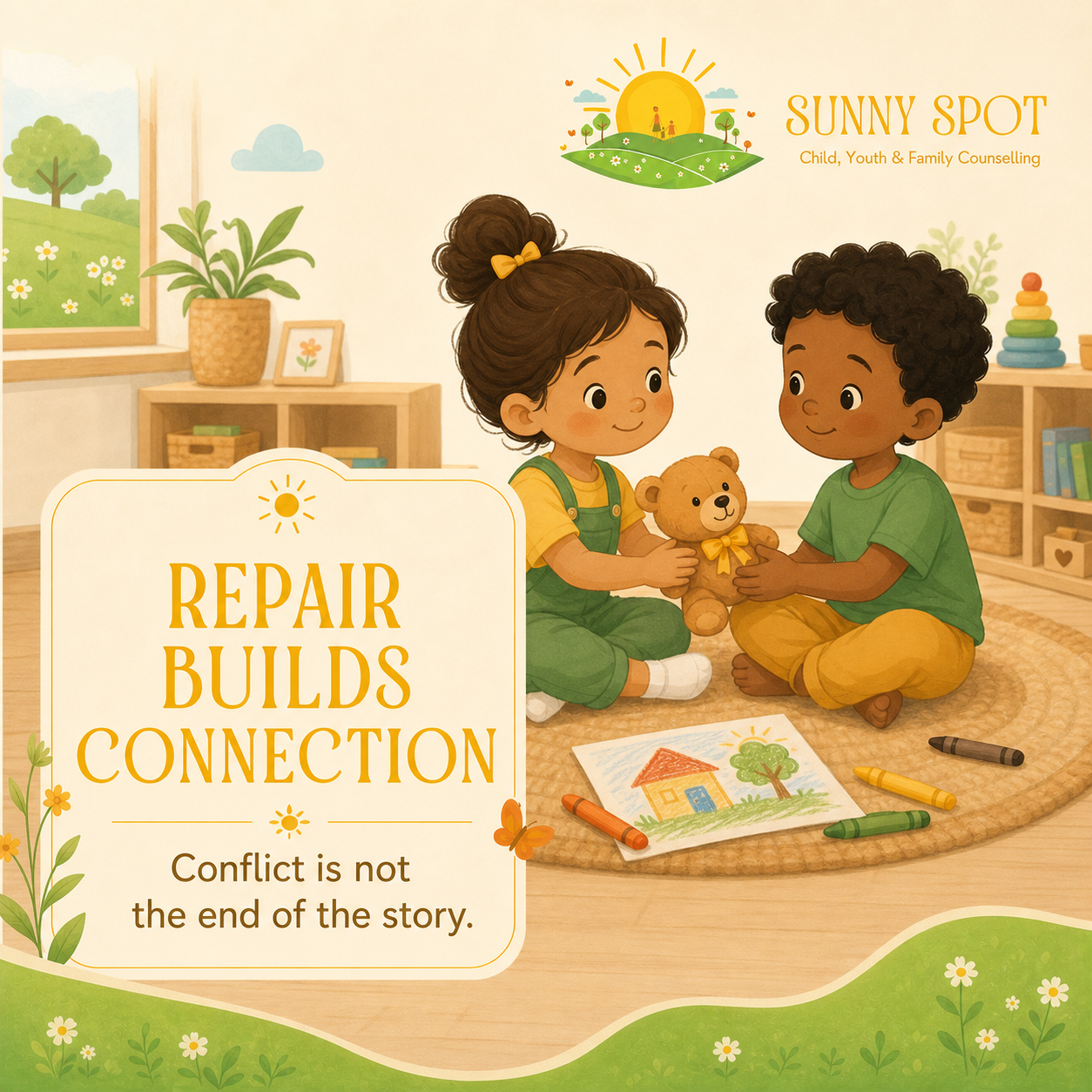
Sibling conflict can fill a home in seconds.
Someone grabs a toy. A voice gets louder. One child pushes. Another screams. Both children want you to decide who was wrong, and you may already be carrying dinner, work, laundry, messages, and your own exhausted nervous system.
Mothers are often expected to become an investigator, referee, and therapist at the exact moment they have the least capacity.
The goal does not need to be a perfect resolution. The goal can be safety, understanding, and one meaningful step toward repair.
Begin with safety
If children are hitting, throwing objects, or unable to stay physically safe, separate them calmly. Use simple language such as, "I will not let you hurt each other. We are taking space."
This is not the moment to demand explanations. Overwhelmed children usually cannot reflect well while their bodies are still in protection mode.
Help each child settle
Different children may need different things. One may want closeness. Another may need quiet. Offer water, movement, a comfortable space, or a few minutes with fewer words.
You do not need to determine who started it before helping both children regulate.
Hear each story separately
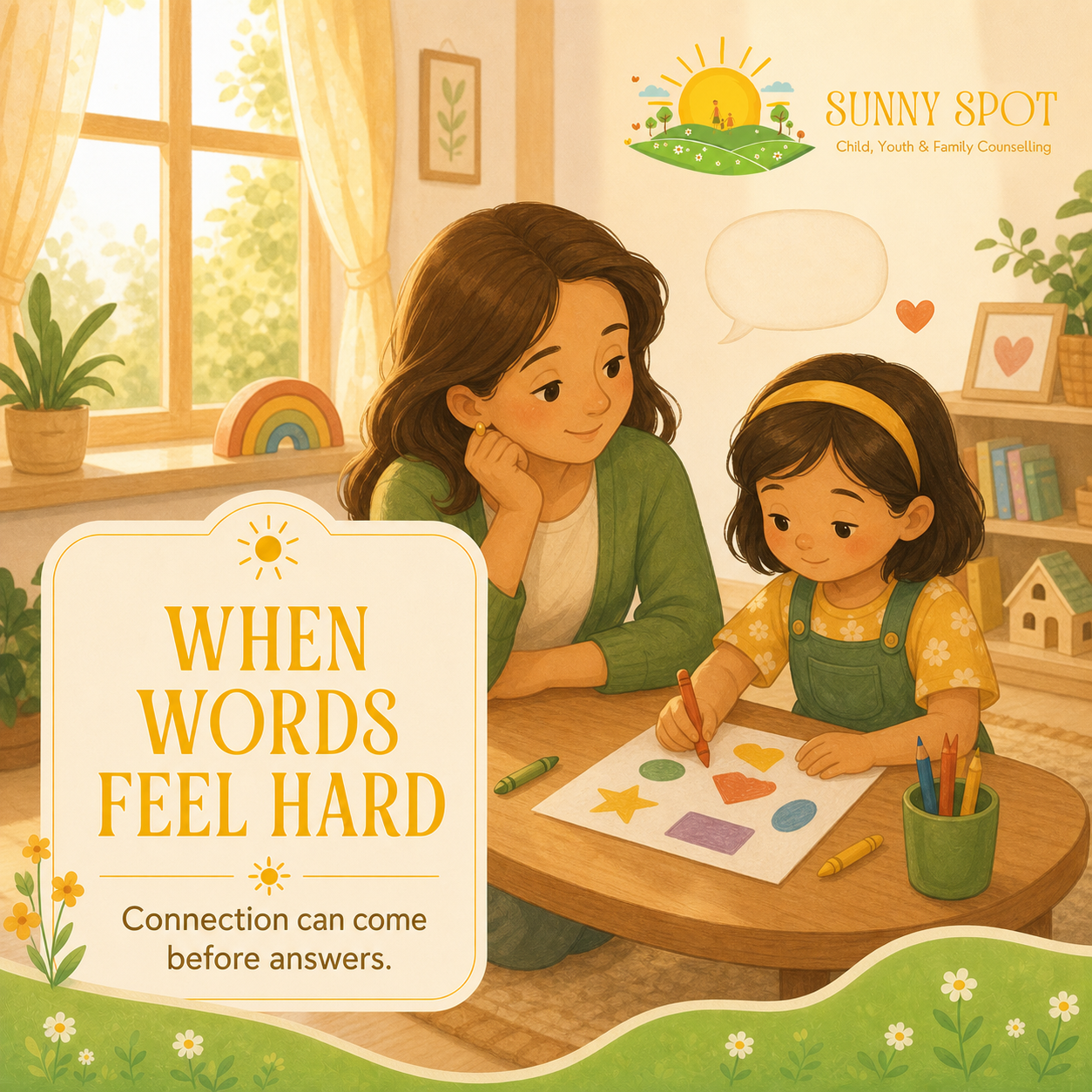
Once everyone is calmer, give each child a chance to explain without interruption. You might say, "Tell me what happened from your point of view," or, "What were you needing in that moment?"
Listen for the need underneath the behaviour. A child may have wanted fairness, space, attention, control, or a turn.
Understanding a need does not mean approving harmful behaviour. You can validate the feeling and still hold the limit.
"You were furious that your tower was knocked down. Hitting is not safe."
Move beyond forced apologies
A quick apology can end the conversation without creating repair. Instead of forcing the words, help the child consider the impact.
Ask, "What do you think that was like for your sibling?" and, "What might help make things a little better?"
Repair could include returning an item, rebuilding something, getting ice, drawing a note, giving space, or making a plan for next time.
Practise the missing skill
Conflict often reveals a skill that is still developing. Children may need help asking for a turn, protecting their space, noticing frustration earlier, negotiating rules, or getting an adult before things become unsafe.
Practise one simple phrase while everyone is calm. "I am still using that." "Please move back." "Can we make a plan?"
Reconnection can be small
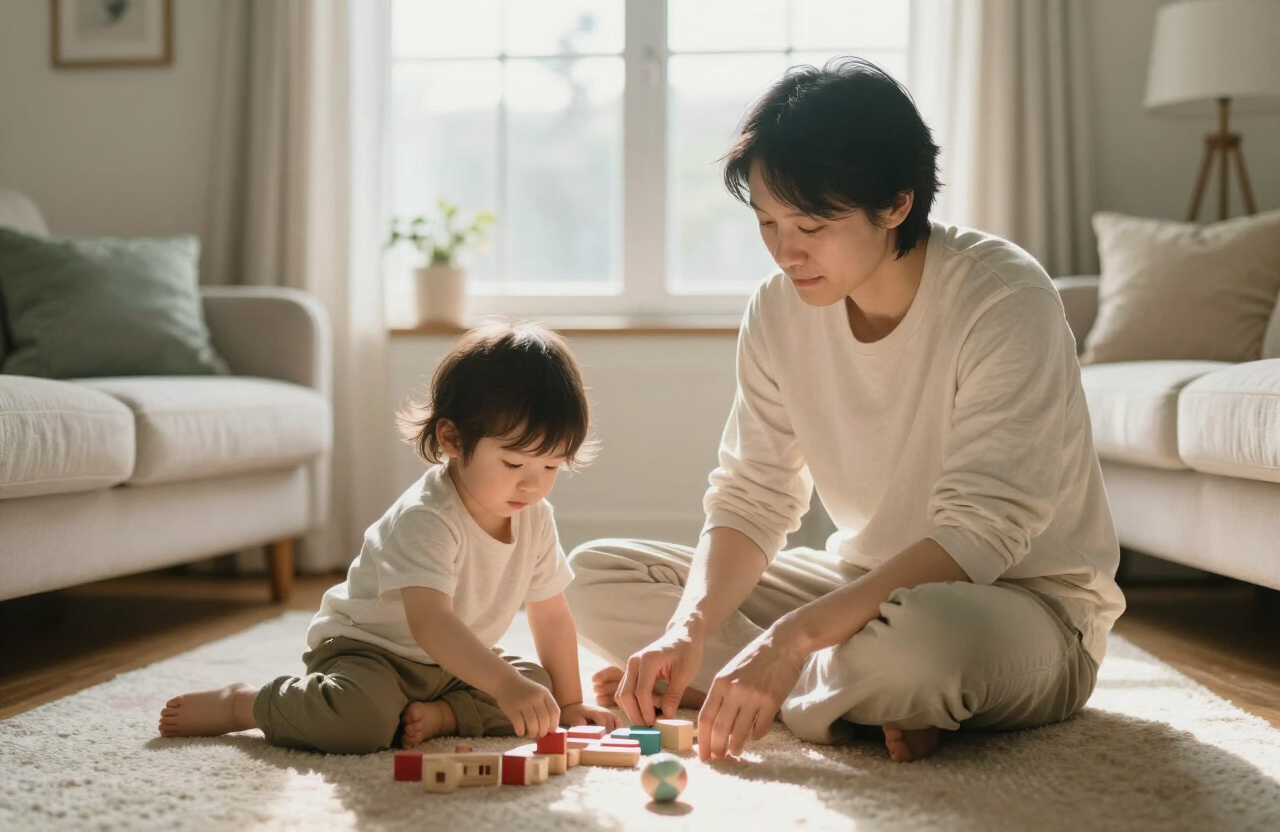
Children do not need to become cheerful immediately. Reconnection may be sitting in the same room, sharing a snack, or returning to separate activities without hostility.
Repair is not about pretending the conflict did not matter. It teaches children that relationships can survive hard moments and that they have some power to make things right.
A compassionate note for mothers
You will not guide every conflict beautifully. Sometimes you will raise your voice or rush the process because the family has to get out the door.
You can repair too. "I was overwhelmed and I yelled. I want to try that again."
Children learn about healthy relationships by watching adults return after difficult moments, not by watching adults perform perfection.
If sibling conflict is frequent, intense, frightening, or regularly unsafe, consider seeking individualized professional support.
Sunny Spot provides relationship-first counselling for children, youth, parents, mothers, and families in Port Coquitlam and the Tri Cities.
If you are the one who raised your voice and wants to make it right, How to Repair After Raising Your Voice walks through a compassionate repair script for parents.
Begin with safety, not a verdict
When siblings are hitting, threatening or destroying belongings, separate bodies and reduce stimulation first. Use clear language: I will not let anyone be hurt. Move other children, objects or yourself as needed. Do not demand a full account while everyone is activated. Safety is not the same as deciding who is the bad child.
Let each child regulate separately
Children often need different forms of support after the same conflict. One may want closeness, another space. One may need movement, another quiet. Avoid forcing them into the same room to solve it quickly. Separate calming protects both children from having to perform remorse before their nervous systems are ready.
Hear both experiences without making them identical
Listen to each child privately when possible. Reflect what they experienced without promising agreement with every detail. You might say: You felt ignored when the game changed. Or: You were scared when the door was blocked. Two perspectives can both contain important information even when responsibility is not equal.
Consider age, power and pattern
Sibling conflict is not always a balanced disagreement. Age, size, developmental capacity, disability, social power and repeated patterns matter. A younger child should not carry equal responsibility for protecting themselves from an older sibling's intimidation. If one child is consistently frightened, targeted or unable to access shared space safely, the adults need a stronger protection plan and may need professional help.
Responsibility without a forced apology
A forced sorry can end the conversation without creating understanding. Instead, help the child name the action and its effect in simple language: I grabbed the controller and you got hurt. The adult can hold accountability even when the child is not ready to speak. Repair should never require the harmed child to hug, forgive immediately or accept contact.
Offer realistic repair choices
- Replace or help repair something that was damaged.
- Give back space or an item without commentary.
- Write or draw a message.
- Ask what would help, while accepting that the answer may be not yet.
- Make a plan for the next shared activity.
- Let the harmed child choose whether to reconnect now or later.
Prevent the next conflict without blaming
Later, look at the conditions around the conflict. Were the children hungry, crowded, competing for a scarce item or expected to share beyond their capacity? Is one child repeatedly placed in a caregiving role? Prevention may involve clearer turns, protected personal belongings, separate spaces, adult proximity or shorter shared activities. The goal is to change the environment as well as teach skills.
Repair the adult response too
Parents may yell, choose sides too quickly or say something shaming during the rush to stop a fight. Repair directly: I called you selfish before I understood what happened. That was not fair. I am sorry. Adult accountability models the same process we ask of children without making the child comfort the parent.
Sunny Spot offers family counselling, practical parent coaching and support related to family conflict. You may also find Repair After Raising Your Voice helpful. A free 15-minute consultation can help caregivers discuss fit and next steps.
Do not rush renewed closeness
Some repairs end with play; others need distance. Let children rebuild trust at a pace that matches what happened. Adults can remain warm to both children while supervising the next interaction more closely. Reconnection is meaningful when it is chosen and safe, not performed to make the household feel finished.
Avoid fixed aggressor and victim roles
It is easy to label one child the aggressor and the other the victim, especially when the same child seems to start the conflict. But sibling dynamics are often more complex. The child who hit may have been provoked repeatedly first. The child who cried may also have a pattern of excluding a sibling. When adults assign fixed roles, one child learns they are always blamed and the other learns they are always helpless. Try to describe the actions in this moment rather than the character of either child. You can say: In this situation, grabbing was not okay, and excluding your sibling earlier was not okay either. Each child can take responsibility for their part without being defined by it.
When safety concerns need urgent action
Some sibling conflict crosses into behaviour that is not safe and cannot wait for a calm repair conversation. If a child is being physically hurt, threatened, cornered, or unable to leave a room, separate them immediately and prioritize safety. If a child is frightened to be alone with a sibling, or if the pattern involves intimidation that an adult cannot safely manage, seek help now rather than treating it as ordinary rivalry. A website article cannot assess risk. When you are unsure whether a situation is urgent, contact an appropriate local resource for real-time guidance.
Common questions caregivers ask
Should I make them say sorry?
A forced apology often teaches children to say words without meaning them. A more useful approach is to help the child notice the impact and choose a repair action, even a small one. The harmed child should never be required to accept the repair or hug the other sibling. Genuine repair grows from understanding, not from pressure to perform.
What if one child is always the one who gets hurt?
When the same child is consistently hurt, frightened, or unable to access shared space safely, the situation needs more than a repair conversation. A stronger protection plan, clearer supervision, and possibly professional support may be needed. Sibling conflict should not leave a child feeling unsafe in their own home. If this is happening, consider reaching out for individualized family support.
For things to try at home, explore our free tools for supporting connection and repair at home.
When sibling conflict is straining the whole family, in-person child and family counselling at Sunny Spot's Port Coquitlam office welcomes families from Coquitlam, Port Moody and across the Tri-Cities.
Related services & support

Written by
Sheila Aini, MC, RCCRegistered Clinical Counsellor · Sunny Spot Child, Youth & Family Counselling
Sheila supports children, teens, parents and families through relationship-first, trauma-informed and neurodivergent-affirming counselling at Sunny Spot's Port Coquitlam office, welcoming families from Coquitlam, Port Moody and across the Tri-Cities.
Have Questions About Your Child?
Book a free 15-minute consultation to see if Sunny Spot is the right fit for your family.
Book a Free 15-Minute Consultation