
How to Repair After Raising Your Voice
Published August 15, 2026 • Updated August 24, 2026
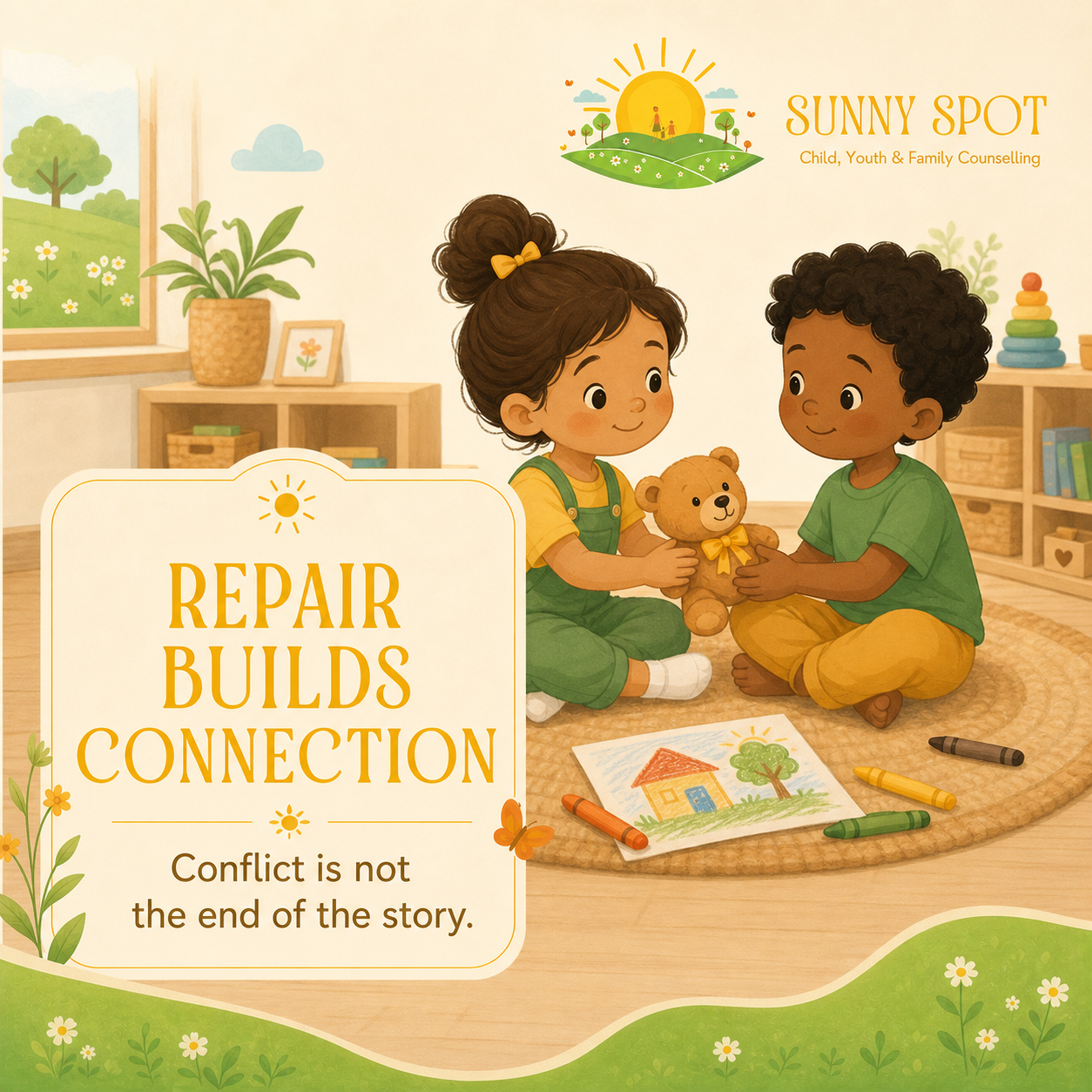
You raised your voice. The moment passed, and now the kitchen feels heavy. Your child is quiet, or tearful, or pretending nothing happened. You are replaying it, wishing you had handled it differently.
Most parents know this feeling. It is uncomfortable, and it is also a chance to do something genuinely useful: repair.
A hard moment does not erase the safe ones
One hard moment does not erase every safe and loving moment that came before it. Children do not need parents who never lose patience. They benefit when adults return, take responsibility, and show that the relationship can hold a mistake.
Repair is not about being perfect. It is about showing your child what happens after a rupture, which is a skill they will need for the rest of their lives.
A narrative-informed lens can help here too. One hard moment does not have to become the whole story of who you are as a parent.
Children do not need perfect parents
When a parent returns and names what happened, a child learns something important: adults can be accountable, big feelings do not destroy relationships, and mistakes can be followed by honesty. That lesson is more powerful than never having raised your voice at all.
A repair script
Try saying: "I was overwhelmed and I raised my voice. That was not your fault. I am sorry. We can try again."
Keep it short and honest. The goal is not a long speech that centers your guilt. It is a clear, calm return that tells your child what happened and that they were not to blame.
Four parts of repair
- Name what happened: "I raised my voice."
- Take responsibility: "That was mine, not yours."
- Validate the impact: "That may have felt scary or unfair."
- Follow with a caring action: closeness, a lower demand, or a fresh start.
Keep the repair honest and short
Do not ask your child to reassure you. "You know I love you, right?" or "You are not mad at me, are you?" places the emotional work back on the child. Repair should leave your child feeling more settled, not responsible for your feelings.
Avoid over explaining or turning the apology into a defense. If the word "but" starts forming, pause. "I am sorry, but you were not listening" is not a repair. It is a correction wearing an apology as a costume.
Actions that can follow words
- Lower the immediate demand if one is not truly necessary.
- Try the moment again at a calmer volume.
- Offer closeness, or respect a request for space.
- Make a small plan for next time, such as a pause before responding.
Repair does not remove a boundary
Saying sorry for how you spoke does not mean dropping a limit that still matters. You can repair your tone and still hold the boundary. "I should not have yelled. And the screen still needs to go off now" is a complete sentence.
When repeated patterns deserve support
If raising your voice is becoming a frequent pattern, that is worth paying attention to, not because you are failing, but because something is asking for support. Stress, sleep, unmet needs, or a child whose behaviour is genuinely hard to manage can all play a part.
You can explore parent coaching or family counselling, or read Helping Siblings Repair After Conflict for more on repair in family relationships. You can also book a free 15-minute consultation.
This article offers general information and is not a substitute for individualized care.
Regulate before you begin the apology
If your body is still flooded, a conversation can easily become another argument or a request for the child to forgive you quickly. Take a brief pause while keeping the child safe. Slow your breathing, drink water, step into another room if another adult can supervise, or plant your feet and use fewer words. The goal is not to become perfectly calm. It is to return with enough capacity to take responsibility.
Name what you did clearly
A useful apology is specific: I yelled and called you disrespectful. That was not okay. Avoid adding but you were not listening. The child's behaviour can be addressed separately. When an explanation becomes an excuse, the child is left carrying responsibility for the adult's loss of control.
Acknowledge the impact without demanding agreement
You might say: My voice was loud and may have felt scary or embarrassing. The child may say it was fine, refuse to talk or express anger. Do not require them to reassure you. Listen if they want to share, and accept that they may need time before reconnecting.
Make one concrete repair
Repair includes what happens next. State one change you will try: Next time I feel that angry, I will step back before speaking. If a practical harm occurred, address it. Replace the item, clarify a false accusation or tell another adult that the child was not responsible. Keep the promise realistic; do not vow that you will never raise your voice again.
Return to the original limit later
Apologizing does not erase a boundary. After connection has been restored, revisit the issue briefly: The limit about hitting still stands. We need a safer plan for both of us. Separating responsibility helps children learn that adults can own harmful behaviour while still providing structure.
A repair script
I raised my voice and said something hurtful. That was my responsibility, not yours. I am sorry. You do not have to make me feel better. I want to listen if you want to tell me how it affected you. Next time I will pause before I respond. The limit is still important, and we can make a safer plan together.
Self-compassion supports accountability
Shame can make a caregiver defensive or lead to dramatic self-criticism that the child then has to soothe. Self-compassion sounds quieter: I acted outside my values, I am responsible for repair, and I can seek support to change the pattern. This stance keeps the focus on safety and learning.
When repair is not enough
An apology is not a substitute for safety when yelling, threats, intimidation or physical harm are repeated. If a child or caregiver is unsafe, seek immediate and appropriate support. Ongoing patterns may require professional care, practical safety planning and changes beyond communication techniques. A website article cannot assess risk.
Sunny Spot offers non-shaming parent coaching and family counselling. Related guides include why big feelings need a soft place to land and how to help siblings repair after conflict. A free 15-minute consultation can help caregivers discuss whether individualized support fits.
Let the repair be ordinary
Repair does not need a dramatic speech. Children may trust a short apology followed by changed behaviour more than a long emotional explanation. Return to an ordinary point of connection when they are ready, such as sharing food, reading or sitting nearby. Do not insist that the relationship look warm immediately. Consistency over time is what gives the words credibility.
Listen to your child or teen's experience
After you have named what you did and taken responsibility, make room for your child's response. They may be quiet, angry, tearful, or ready to move on. You can say: I want to hear how that was for you, if you want to tell me. Then listen without defending yourself or explaining why you yelled. If they share, reflect what you hear: That sounded scary, or You felt blamed for something that was not yours. If they do not want to talk, accept that too. Repair does not require your child to narrate their feelings on your timeline.
Repair looks different at different ages
A younger child may need a short, simple apology followed by closeness or play rather than a long conversation. They often respond more to your calm return and changed tone than to many words. A teen may need space before any conversation and may react to an apology that feels performative. With a teen, keep it brief and genuine, and let them decide when to reconnect. Forcing a heartfelt talk can feel like another demand. Trust that a short, honest repair followed by consistent behaviour teaches more than a speech.
Common questions caregivers ask
What if my child says it was fine?
Children sometimes minimize the impact to avoid conflict or protect the adult. You can acknowledge their response without dismissing your responsibility: I am glad you are okay, and I still want to name that my voice was too loud. You do not need them to agree the moment was bad for your apology to be valid.
How often is too often to be repairing?
Occasional repair after a hard moment is part of healthy family life. If you are repairing the same kind of reaction most days, that pattern deserves attention rather than repeated apologies. Stress, sleep, unmet needs, or a child whose behaviour is genuinely difficult to manage can all play a part. Parent coaching or family counselling can help you look at the pattern, not just the individual moments.
For things to try at home, explore our free practical parent resources for repair and connection.
If you would like support repairing and strengthening your relationship with your child, in-person child and parent support at Sunny Spot's Port Coquitlam office welcomes families from Coquitlam, Port Moody and across the Tri-Cities.
Related services & support

Written by
Sheila Aini, MC, RCCRegistered Clinical Counsellor · Sunny Spot Child, Youth & Family Counselling
Sheila supports children, teens, parents and families through relationship-first, trauma-informed and neurodivergent-affirming counselling at Sunny Spot's Port Coquitlam office, welcoming families from Coquitlam, Port Moody and across the Tri-Cities.


Have Questions About Your Child?
Book a free 15-minute consultation to see if Sunny Spot is the right fit for your family.
Book a Free 15-Minute Consultation