
Big Feelings Need a Soft Place to Land
Published August 2, 2026 • Updated August 24, 2026
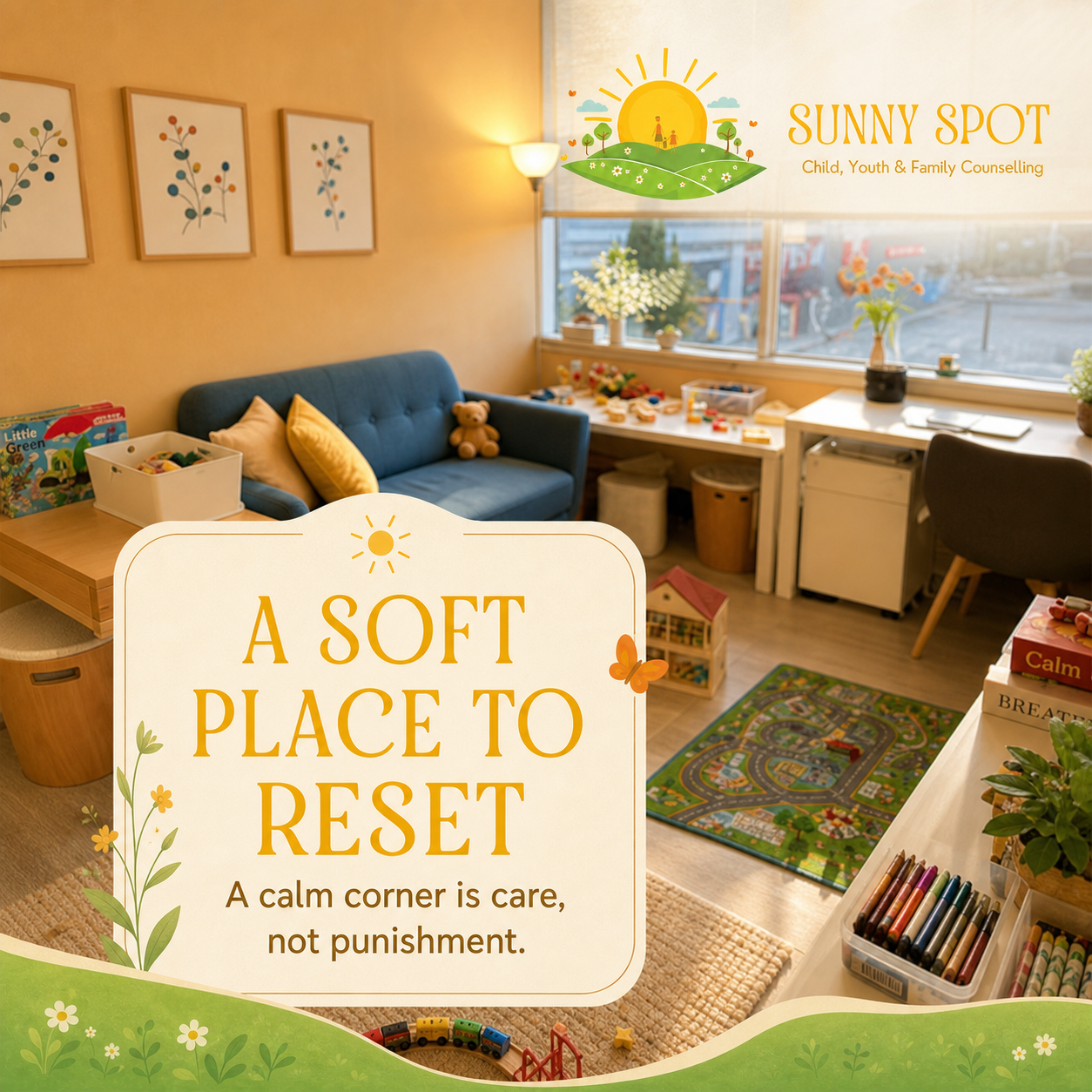
Children feel things deeply.
Excitement, disappointment, worry, embarrassment, loneliness, and joy can move through a child with full intensity. What children often do not yet have is a reliable way to name what is happening inside them, or a sense that difficult feelings are safe to share.
When feelings have no soft place to land, they tend to come out sideways. Through a meltdown, a refusal, a withdrawn silence, or a sudden burst of physical energy, the emotion finds its way out whether or not anyone is ready for it.
Words are not always the first tool
Adults tend to expect children to explain what they are feeling, often right in the middle of feeling it. This puts a very high demand on a brain that is still developing the capacity for emotional language and self reflection.
For many children, especially younger children or those with big and intense emotions, play and creative expression offer a gentler path. A child who cannot say "I am scared about tomorrow" may be able to show it through a figurine, a drawing, a stuffed animal, or a piece of play.
Emotion plushies and playful feeling tools
One of the ways Sunny Spot supports emotional awareness is through playful, tangible tools. Emotion plushies and feeling cards give children a concrete way to point to something before they can put it into words.
A child might pick up the worried one or the frustrated one and hold it without saying anything at first. That choice itself is information. It opens a door without requiring a speech.
Over time, matching a physical object or image to an internal state helps children build vocabulary for their own emotional experience. They begin to recognize feelings earlier, name them more easily, and communicate what they need with slightly less overwhelm.
Every feeling is welcome here
One of the most important messages a child can receive is that no feeling is bad or wrong. Anger, sadness, jealousy, fear, and frustration are not problems to be fixed. They are signals. They carry information. They deserve space.
When children learn that difficult feelings are allowed, they become less afraid of them. A child who believes "I can be angry and still be okay" is far better positioned to move through hard emotions than a child who has learned that certain feelings are not safe to express.
Practising coping skills through play
Play based counselling offers more than emotional recognition. It gives children a chance to practise coping skills in a low pressure environment. Breathing, grounding, self soothing, and asking for help can all be woven into playful interaction without requiring a child to sit still and follow instructions.
When a skill is practised in a warm, enjoyable context, children are more likely to remember it and reach for it during hard moments.
What caregivers can do at home
You do not need special materials to support emotional awareness. At home, try naming your own feelings out loud in simple language. Notice your child's body and offer a gentle observation: "You look like you might be feeling frustrated." Accept whatever they share without correcting the label.
The goal is not perfect identification. The goal is a consistent message that feelings are noticed, named, and welcome.
Sunny Spot Child, Youth and Family Counselling offers warm, play-based, relationship-first support for children and families in Port Coquitlam and the Tri Cities.
A soft landing is not the same as giving in
A soft place to land means that a child can bring a hard feeling into the relationship without losing belonging. It does not mean that every request is granted or that unsafe behaviour is ignored. A caregiver can be deeply kind and still hold a clear limit. The message is: your feeling is welcome, your body and everyone else's body must stay safe, and I will stay close while we work through this.
This distinction matters because children often hear correction as rejection when they are already overwhelmed. A short boundary delivered with a steady voice can protect safety without adding shame. Try: I will not let you hit. I am moving back and I am staying nearby. Or: It is okay to be furious. The tablet is still finished for tonight.
What warmth and boundaries can sound like together
In the hardest moment, fewer words are usually easier to receive. Begin by naming what you see without arguing about whether the feeling is reasonable. You might say: This was not how you hoped it would go. I can see how disappointed you are. Then state the limit once, in concrete language. Repeating a long explanation can feel like more noise to an overloaded nervous system.
If your child rejects comfort, warmth can also look like respectful space. You can say: I will give you room, and I will check again in a few minutes. Connection is not always a hug or a conversation. Sometimes it is a glass of water placed nearby, the hallway light left on, or a caregiver who remains calm enough to be available when the child is ready.
Protecting connection during unsafe behaviour
Safety comes first. Move siblings or breakable objects away, block only what must be blocked, and reduce the audience when possible. Avoid demanding eye contact, an apology, or a lesson while the child is highly activated. Those conversations require capacities that may be temporarily offline. If you feel yourself becoming flooded, use the fewest words possible and focus on creating physical space.
After everyone is safe, the relationship still needs repair. Repair is not a reward for calming down. It is how children learn that difficult moments can be survived without losing connection. A simple return can be enough: That was a hard moment. I am glad we are together again. We can talk about what happened when both of us are ready.
Teaching belongs after regulation
Later, when faces and voices are softer, become curious together. What did your child notice first in their body? What made the situation harder? What helped even a little? Keep the conversation brief and avoid turning it into a courtroom. The goal is not to prove who was right. It is to help your child recognize the path into overwhelm and discover one possible path out.
You might practise a replacement action during an ordinary moment: pushing firmly against a wall, asking for a pause, tearing scrap paper, moving to a quieter room, or using a phrase such as I need space. A strategy becomes more usable when it has been rehearsed without pressure. It is also okay if the first plan does not fit. Children differ in what feels settling, and needs can change across days.
When caregivers need a soft place too
Holding another person's intense emotion is demanding. You may feel anger, fear, embarrassment, grief, or doubt about your parenting. Those reactions do not make you uncaring. Notice what support helps you stay within your own capacity, whether that is trading off with another adult, taking three slow breaths before speaking, lowering one nonessential demand, or returning later to repair your own tone.
Questions caregivers often ask
Does a soft place to land mean no consequences?
No. A soft landing means the feeling is welcome and the relationship stays intact. It does not mean the behaviour has no impact. You can hold a clear limit and still be kind. Consequences and repair conversations land better after regulation, when your child can think clearly. Compassion and accountability work together; they are not opposites.
What if my child says they want to be alone?
Respect the request for space when it is safe to do so, and let your child know you will check back. Wanting to be alone is not always rejection. Some children settle more quickly without an audience. You might say: I will give you room. I will check on you in a few minutes. Following through on that check-in is what makes the space feel safe rather than like abandonment.
How is this different from just giving in?
Giving in means dropping a limit to avoid the discomfort of the feeling. A soft place to land means staying present with the feeling while keeping the limit. Your child learns that hard emotions are survivable and that boundaries can hold without breaking connection. That is a very different message from learning that a big enough reaction removes a rule.
Sunny Spot's child counselling and emotional regulation support are relationship-first and non-shaming. Caregivers can also explore parent coaching or read about repair after raising your voice. These resources offer general education; a free 15-minute consultation can help you decide whether individualized support may fit your family.
For things to try at home, explore our free parent resources for big feelings.
When big feelings need a soft place to land, in-person emotional regulation support at Sunny Spot's Port Coquitlam office welcomes children, teens and families from Coquitlam, Port Moody and across the Tri-Cities.
Related services & support

Written by
Sheila Aini, MC, RCCRegistered Clinical Counsellor · Sunny Spot Child, Youth & Family Counselling
Sheila supports children, teens, parents and families through relationship-first, trauma-informed and neurodivergent-affirming counselling at Sunny Spot's Port Coquitlam office, welcoming families from Coquitlam, Port Moody and across the Tri-Cities.

Have Questions About Your Child?
Book a free 15-minute consultation to see if Sunny Spot is the right fit for your family.
Book a Free 15-Minute Consultation