
A Calm Corner Is Not a Punishment
Published August 3, 2026 • Updated August 24, 2026
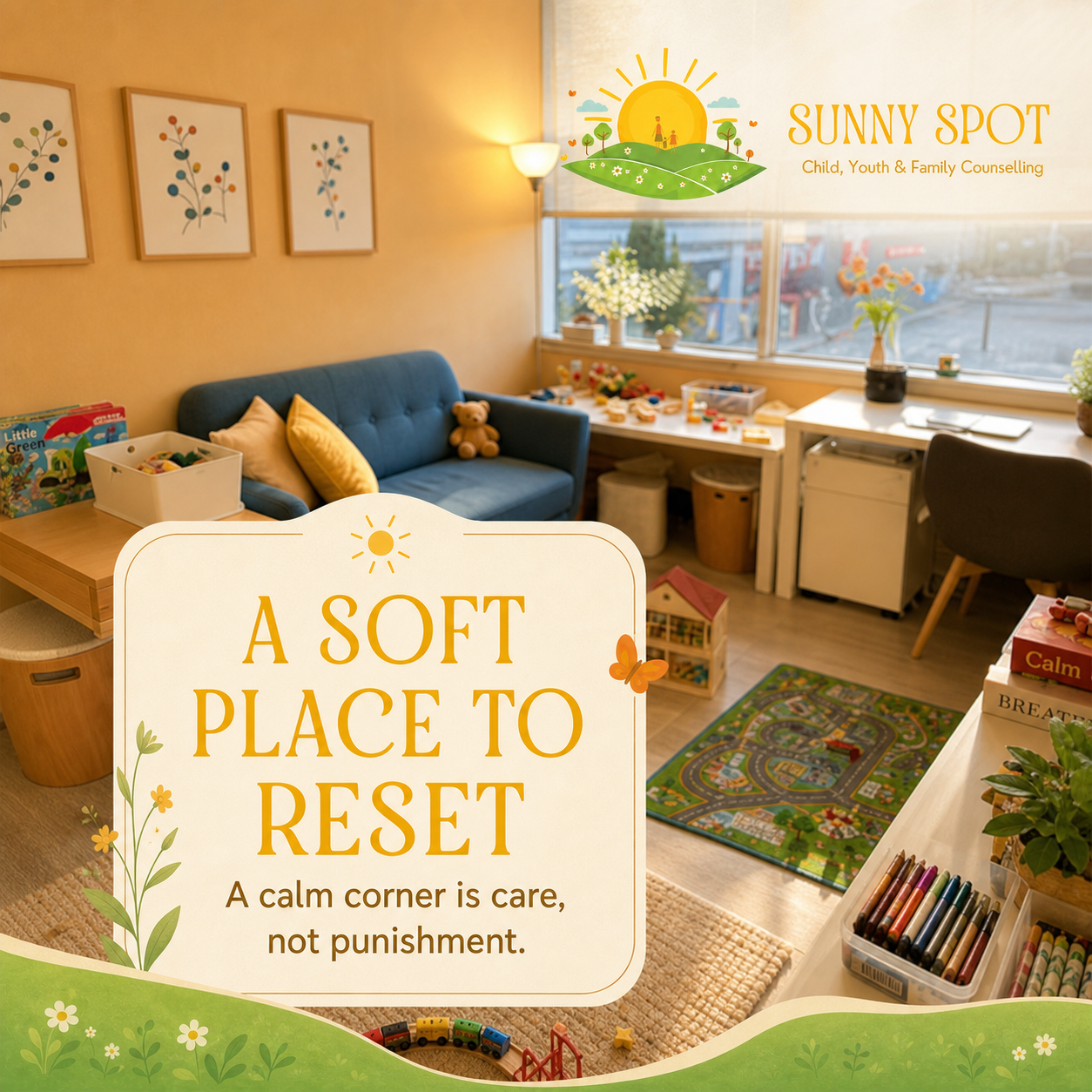
There are moments when a child is too overwhelmed to explain what is wrong, follow a direction, or accept a solution. Their body may be moving quickly. Their voice may be getting louder. They may hide, cry, argue, freeze, or push everything away.
For mothers, these moments can feel incredibly public and personal. You may be trying to help while also wondering whether you are responding correctly, whether you are being judged, and how you will manage everything else that still needs to happen.
A calm corner can offer a different message.
It says, "You are not in trouble. Your body needs support. We can pause here together."
What a calm corner really is
A calm corner is a comfortable space where a child can reduce stimulation and find tools that help their body settle. It is not a place where a child is sent away for having feelings. It is not a punishment, and it does not need to look perfect.
The most helpful calming spaces feel inviting and familiar. They may include a soft pillow, a blanket, a stuffed animal, paper and crayons, a sensory toy, headphones, or a few picture cards showing calming choices.
Your child does not need every possible tool. A simple basket with two or three options is enough.
Build it before the hard moment
Invite your child to help choose the location and a few items when everyone is calm. You might say, "Sometimes our bodies need a quiet place. What would help this space feel comfortable for you?"
Explore the space together without expecting your child to use it right away. Sit there for a story. Draw together. Practise taking a slow breath or squeezing a pillow. Familiarity makes it easier to return when emotions are bigger.
Offer connection before correction
During a difficult moment, keep your language short and gentle. You might say, "Your body looks overwhelmed. We can sit in the calm space together," or, "Would you like the blanket or the drawing paper?"
Some children want a parent nearby. Others need a little room. Staying emotionally available matters more than finding the perfect sentence.
After your child is settled, reconnect before discussing what happened. A drink of water, a quiet cuddle, or simply sitting together can help restore safety. Problem solving usually works better once both of you have more capacity.
A note for mothers
You are allowed to have a calm corner too. It might be one chair, a cup of tea, a few minutes in the car, or a reminder on your phone that says, "Pause before fixing." Supporting a child's regulation is demanding work. Your nervous system deserves care as well.
If intense emotions are making everyday life difficult for your child or family, counselling can offer a supportive place to understand patterns and build practical skills together.
Sunny Spot Child, Youth & Family Counselling provides warm, relationship-first support in Port Coquitlam and the Tri Cities.
The purpose is regulation, not removal
A calm corner works best when it communicates welcome: this is a place you may use when your body needs less input or more support. It should not become the place a child is sent because their feelings make other people uncomfortable. If the space is used only after conflict, with a sharp command or a timer the child cannot control, it can quickly feel like isolation even when the materials are lovely.
Introduce the space during a neutral moment. Sit there together, explore what is available and explain that adults may use regulation spaces too. The child does not need to be visibly upset to use it, and they should be able to leave when they are ready unless immediate safety requires a different plan.
Choose the location with your child
Look for a place that feels protected without being hidden or cut off. A corner of a bedroom, a small tent in a family room, or a chair beside a bookshelf may work. Ask your child what feels comfortable. Some children want a caregiver nearby; others settle more easily with privacy. A busy hallway or a space beside a loud television is unlikely to reduce load.
Keep the materials simple and individualized
- A soft place to sit or lean
- One or two familiar sensory tools chosen by the child
- Paper and drawing materials
- Headphones or a way to reduce sound
- A visual with two or three options, such as breathe, squeeze or ask for company
- Water nearby when appropriate
More items are not always better. A crowded bin can create another decision. Notice whether each object actually helps your child settle, organize or feel connected. A tool that supports one child may irritate another. Avoid requiring a particular breathing exercise or sensory item simply because it is labelled calming.
Model using the space before expecting it
Children learn from seeing regulation treated as ordinary. A caregiver might say: My voice is getting tight, so I am going to sit here and take a pause. Return afterward and name what helped. This shows that stepping away is not a punishment and that people can come back to a conversation after caring for their nervous system.
When you notice early signs of strain, offer the space as one option: Would your body like the calm corner, movement with me, or for me to stay right here? Choice protects dignity. If your child says no, you can still reduce noise, move breakable objects or offer your calm presence where they are.
Reconnection belongs in the plan
A calm corner should not end with the child quietly returning while everyone pretends nothing happened. Reconnection may be brief: I am glad you are back. Do you want company or a little more space? Later, if someone was hurt or a limit was crossed, support a realistic repair without forced affection or a scripted apology.
Signs the calm corner is helping
A calm corner is working when your child begins to use it on their own, even occasionally, and when they leave it feeling slightly more settled rather than more shut down. You may notice shorter or less intense storms, a quicker return to connection, or your child reaching for a familiar tool without being prompted.
Progress is rarely linear. A child who used the space well last week may refuse it entirely this week. That does not mean the idea has failed. It may mean the day was harder, the need was different, or the space needs refreshing. Look at the overall direction over weeks rather than any single afternoon.
The clearest sign is relational. If your child associates the space with comfort and choice rather than exile, it is doing its job. If they flinch when you mention it, avoid it, or only go when sent, pause and reconsider how it is being introduced. Regulation support should feel like an offering, not a sentence.
When a calm corner is not enough
A regulation space cannot solve persistent school distress, repeated unsafe behaviour, overwhelming family conflict or needs that require individualized assessment. It is one supportive option, not a treatment plan. If your child avoids the corner, becomes more distressed there or needs more help than the family can provide in the moment, stop and reconsider the setup rather than insisting.
For more support, explore Sunny Spot's emotional regulation resources and parent coaching. You may also find the guides on what a sensory break can look like and helping children with big feelings useful. These ideas are general education, and a free 15-minute consultation can help clarify whether individualized support may be appropriate.
Review the space as your child grows
A calm corner is allowed to change. A preschooler may want picture cards and a stuffed animal, while an older child may prefer music, a sketchbook or a simple chair away from family noise. Check in occasionally: What still helps here? What feels babyish, distracting or uncomfortable? Letting the child remove items is part of keeping the space respectful. The goal is not to preserve a perfect setup. It is to maintain one accessible place where regulation, choice and return to relationship are supported.
For things to try at home, explore our free parent resources for emotional regulation.
If you would like help building regulation routines that fit your child, in-person child and family support at Sunny Spot's Port Coquitlam office welcomes families from Coquitlam, Port Moody and across the Tri-Cities.
Related services & support

Written by
Sheila Aini, MC, RCCRegistered Clinical Counsellor · Sunny Spot Child, Youth & Family Counselling
Sheila supports children, teens, parents and families through relationship-first, trauma-informed and neurodivergent-affirming counselling at Sunny Spot's Port Coquitlam office, welcoming families from Coquitlam, Port Moody and across the Tri-Cities.


Have Questions About Your Child?
Book a free 15-minute consultation to see if Sunny Spot is the right fit for your family.
Book a Free 15-Minute Consultation