
What a Sensory Break Can Look Like
Published August 4, 2026 • Updated August 24, 2026
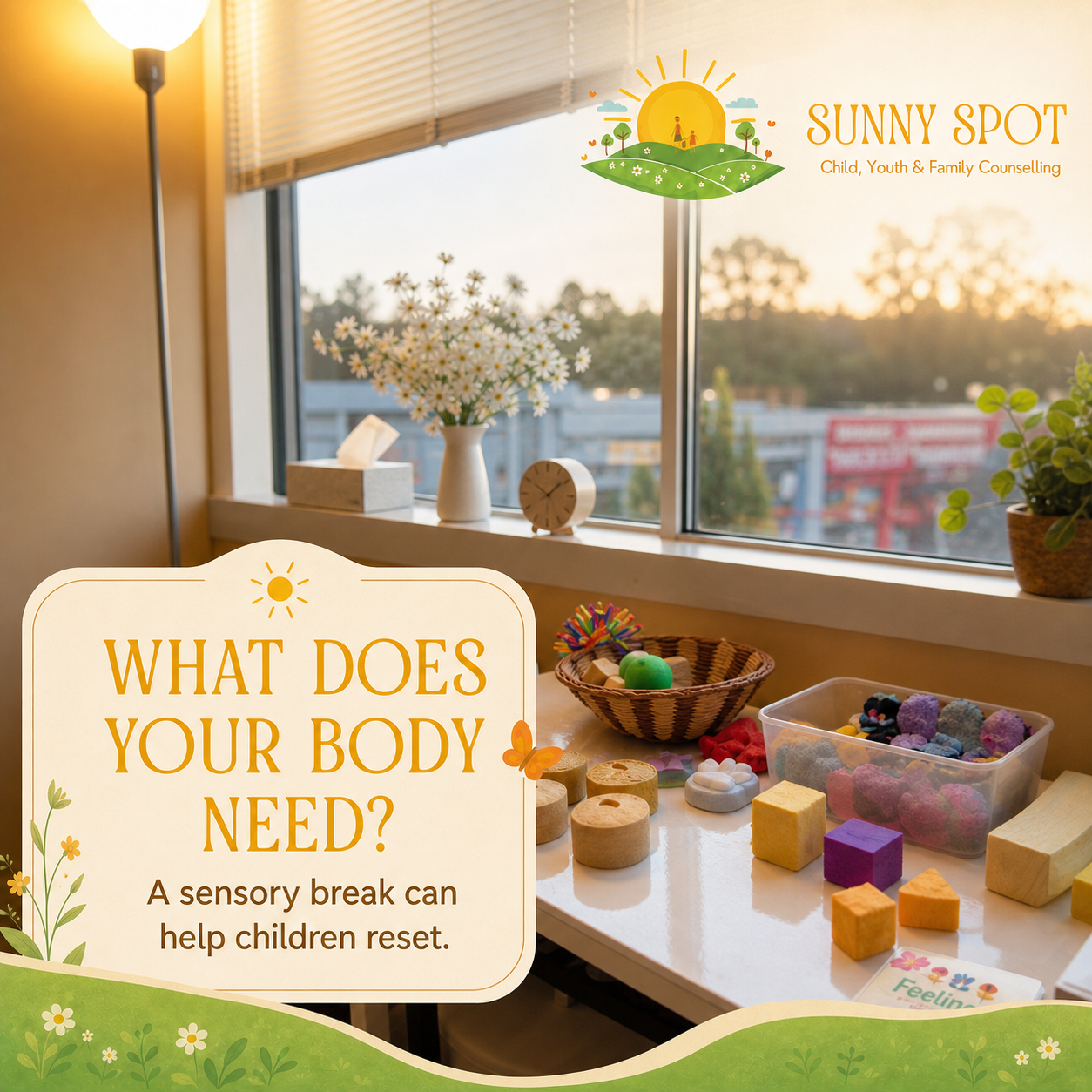
Some children come home from a busy environment looking as though they have endless energy. They may jump on furniture, crash into cushions, hum, spin, pace, cover their ears, or refuse to answer questions.
To an exhausted mother, it can look like chaos arriving at the exact moment you are trying to make dinner, answer messages, and move the evening forward.
Sometimes the question is not, "How do I stop this behaviour?"
Sometimes the more helpful question is, "What kind of input or relief is this child's body asking for?"
Sensory needs can look different
One child may seek movement after sitting all day. Another may need quiet after managing noise, lights, conversations, and transitions. A child may want strong pressure, repetitive movement, a familiar texture, or a break from being touched and spoken to.
There is no single sensory break that works for every child. The goal is not to make a child perfectly calm. The goal is to notice what supports their body and makes the next part of the day feel more manageable.
Movement breaks
Movement may help a child who is restless, crashing, climbing, or struggling to slow down. Depending on your child and the space available, this might include jumping, dancing to one song, carrying something appropriate, pushing against a wall, animal walks, stretching, or a short walk outside.
Keep safety in mind and choose activities that fit your child's abilities.
Quiet breaks
Some children need less input. A quiet break might mean dimmer lights, fewer questions, a blanket, headphones, a familiar book, or a few minutes in a peaceful room.
Silence can be supportive. You do not need to fill every pause with instructions or conversation.
Creative and tactile breaks
Drawing, clay, water play, sorting small objects, building, or gently squeezing a sensory toy can give busy hands something predictable to do. These activities may also create an easier path into conversation because the child does not have to sit still and make eye contact while talking.
How to offer a break
Try offering two simple choices. You might ask, "Does your body need movement or quiet?" or, "Would drawing or jumping feel better?"
If your child does not know, that is okay. You can try one option together for a few minutes and notice what happens.
Sensory preferences can change from day to day. Curiosity is more useful than forcing the same strategy every time.
For the mother carrying the whole evening
A sensory break is not another elaborate routine you have to perform perfectly. It can be three minutes of movement while dinner warms up. It can be turning down the lights. It can be choosing not to ask about school until your child has eaten.
Small adjustments can communicate, "I see that your body has worked hard today."
If sensory needs are causing significant distress or regularly interfering with daily life, consider speaking with an appropriate health professional for individualized guidance.
Sunny Spot provides neurodivergent-affirming, relationship-first counselling for children, youth, parents, and families in Port Coquitlam and the Tri Cities.
A sensory break changes the input
A sensory break is not one particular activity. It is a planned change in what the nervous system is receiving. A child may need less sound, light, touch or social demand. Another child may need movement, pressure or something rhythmic to help their body organize. The same child may need different input on different days. That is why a break should be based on observation and consent rather than a standard sensory menu.
Examples at home
- Dim the lights and reduce competing sounds.
- Offer a quiet room, headphones or time under a familiar blanket.
- Invite pushing, carrying, jumping or a walk when movement helps.
- Pause conversation and use a visual choice instead of more questions.
- Change clothing, seating or temperature when discomfort is adding load.
Offer, do not force. A child who usually likes deep pressure may not want touch in a particular moment. Ask before hugging, wrapping or placing anything on their body. If the child cannot answer verbally, watch for approach, withdrawal and changes in breathing or muscle tension.
Examples at school
At school, a sensory break may be a brief water refill, a quieter workspace, movement between tasks, a predictable hallway job, access to headphones or a few minutes with reduced visual demand. It should not require a child to fail first. When possible, build access into the day before overload peaks and make the plan discreet enough to protect dignity.
School staff and caregivers can share neutral observations: what happened before the break, what the child chose, and whether they returned with more capacity. Avoid using the break as a removal for behaviour or withholding it as a consequence. Regulation support is an access need, not a prize.
Sensory support during transitions
Transitions combine multiple demands: stopping, shifting attention, moving spaces, tolerating uncertainty and sometimes changing sensory environments. Preview the transition briefly, allow time to finish, and carry one familiar regulating option into the next setting. After school, a low-question arrival routine can be more helpful than immediately processing the day.
Signs a break may be helping
- Breathing or voice becomes less strained.
- The child begins to notice choices again.
- Movement becomes more organized rather than more frantic.
- The child can reconnect or return to a task with less effort.
- They ask for the break earlier over time.
A child does not need to look still for a break to be effective. Pacing, rocking or moving may be part of regulation. Watch for increased capacity and comfort rather than adult expectations of calm behaviour. If the child emerges more agitated, the input may have been wrong, too intense or offered too late.
When to get individualized guidance
General ideas cannot identify a child's sensory profile. Seek individualized guidance when sensory distress is frequent, unsafe or significantly affects eating, sleep, school attendance, hygiene or family participation. Counselling may support emotional and relational parts of the experience; other qualified professionals may be appropriate depending on the child's needs. Sunny Spot does not replace medical or occupational-therapy assessment.
Build choice before overload
Children are more likely to use a sensory break when they have helped choose it and can access it before distress becomes extreme. During a neutral time, identify two or three options and agree on a simple way to request one, such as a word, picture, gesture or card. Practise adults responding without debate. Early access can shorten recovery and reduce the need for a child to communicate through behaviour. Review the plan regularly because a strategy that helped last season may not fit current routines, growth or preferences.
Pressure, sound, light and the environment
A sensory break is not only movement or quiet. Some children find deep pressure organizing: a firm hug they welcome, a weighted lap item used with guidance, leaning into a cushion or pressing palms into a wall. Others need the sound environment changed: headphones for a noisy hallway, a familiar low sound, or a few minutes away from competing voices.
Light and temperature matter too. Dimming overhead lights, moving to a spot with softer daylight, or adjusting a layer of clothing can lower load when the environment itself is part of the overwhelm. There is no correct combination. The right break is the one that matches what this child's body is asking for today.
Consent, choice and communication preferences
A sensory break should always be offered, never imposed. Ask before adding pressure, touch or sound, and respect a no. Some children and teens communicate their needs verbally. Others use pictures, gestures, a written card or by moving toward or away from an option. Watch for approach and withdrawal rather than insisting on words.
Choice is part of what makes a break regulating. When a child helps select the option, they practise noticing their own body and trusting that their needs can be met. A break that is chosen is usually more effective than one that is assigned, and it protects the dignity of a child or teen who may already feel exposed.
Why a sensory break is not a reward to be earned
Regulation support is an access need, not a prize for good behaviour. Withholding a break because a child has not earned it tends to increase the very overload the break was meant to prevent. A child who is already dysregulated is not in a position to earn their way back to calm. Offering the break early, before distress peaks, usually shortens recovery and protects learning and relationships.
Common questions caregivers ask
What if the break makes my child more wound up?
Sometimes the input was too intense, offered too late, or simply the wrong match for today. Stop, reduce the demand, and try a quieter or smaller option. A break that increases agitation is information, not failure. It tells you to adjust the input rather than push through it.
How long should a break last?
There is no fixed length. Some children reset in two minutes of movement. Others need ten quiet minutes before they can rejoin. Watch for signs of returning capacity rather than watching the clock. A break that ends too soon can leave a child half-regulated; one that drags on can become avoidance. Let need, not a timer, guide the length.
For things to try at home, explore our free gentle resources for regulation and sensory breaks.
When sensory overwhelm is shaping your child's days, in-person child counselling at Sunny Spot's Port Coquitlam office welcomes families from Coquitlam, Port Moody and across the Tri-Cities.
Related services & support
Local counselling information for Port Moody families
Sunny Spot's office is in Port Coquitlam, welcoming families from across the Tri-Cities.

Written by
Sheila Aini, MC, RCCRegistered Clinical Counsellor · Sunny Spot Child, Youth & Family Counselling
Sheila supports children, teens, parents and families through relationship-first, trauma-informed and neurodivergent-affirming counselling at Sunny Spot's Port Coquitlam office, welcoming families from Coquitlam, Port Moody and across the Tri-Cities.

Have Questions About Your Child?
Book a free 15-minute consultation to see if Sunny Spot is the right fit for your family.
Book a Free 15-Minute Consultation