
What Happens in a Child's First Counselling Session?
Published July 21, 2026 • Updated August 23, 2026
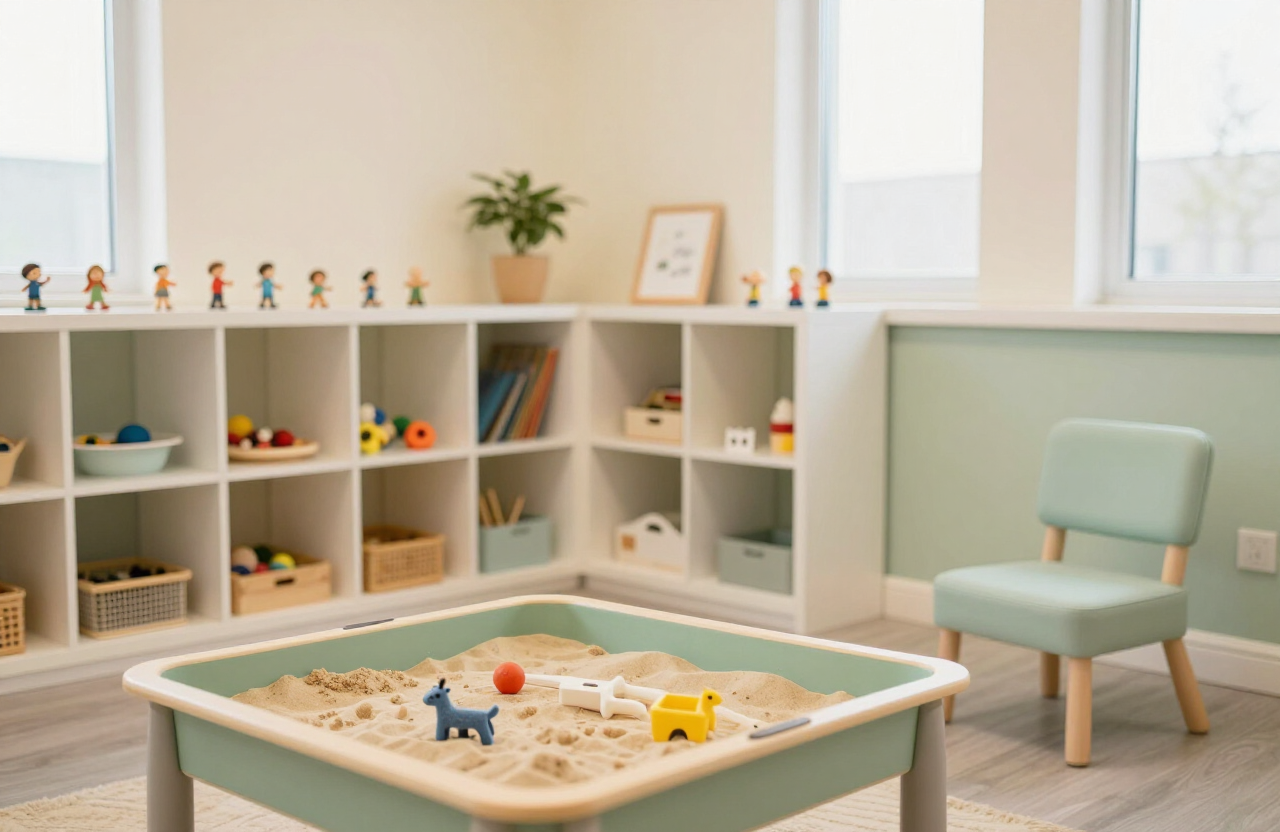
Starting counselling can feel like a big step, for your child and for you. It is completely normal to wonder what actually happens behind the playroom door, and whether your little one will feel comfortable. Knowing what to expect can take a lot of the mystery (and worry) out of the process, so let's walk through it gently, together.
It usually begins with the caregivers
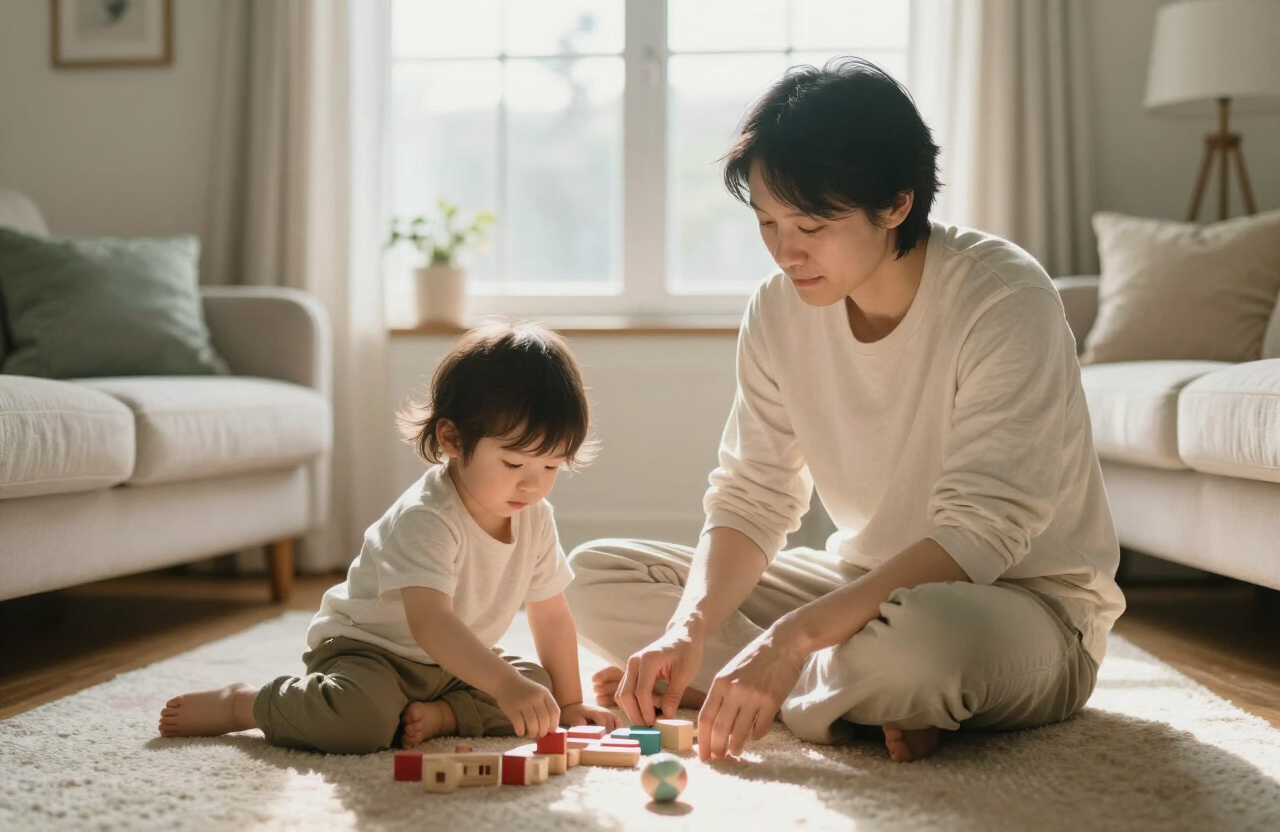
In most cases, the very first conversation is with you, the parent or caregiver, rather than the child. This caregiver intake gives Sheila a chance to hear your family's story: what you are noticing, what you have already tried, your child's strengths, and what you are hoping for. You know your child better than anyone, so your perspective is the foundation of the work.
This is also your time to ask questions, share any worries, and talk through practical details. Nothing about it is a test. It is simply two adults who care about your child putting their heads together.
What to bring to the caregiver conversation
You do not need to prepare a formal report, but it can help to gather a few things in advance. During the caregiver intake, Sheila may ask about your child's history, your family's current circumstances, and what you have already tried. Having a sense of the following can make the conversation more useful:
- Recent changes or stressors at home, school, or in the family
- What the tricky moments tend to look like and when they happen
- What you have already tried, and what did or did not help
- Your child's strengths, interests, and the things that comfort them
- Any reports or input from school, doctors, or other professionals
- Your hopes and questions, even the ones that feel small
If you do not have all of this, that is completely fine. You can simply show up and talk. The conversation is a starting point, not a test of how well you know your child.
Preparing your child without making it sound scary
How you introduce counselling shapes how your child walks in. The goal is to keep it light and free of pressure. Counselling should never sound like a consequence for behaviour or a place children go because they are "bad." A few gentle framings that tend to land well:
- "You are going to meet a kind person who has a special room full of toys and art."
- "Her job is to get to know you and play with you."
- "There is nothing you have to do or say. You just get to be you."
Avoid over-explaining or over-preparing, which can accidentally raise anxiety. A simple, warm heads-up is usually plenty.
Entering the playroom: relationship and safety first
When your child comes in, the first goal is not to dig into problems. It is simply to help them feel safe. The early sessions are about building trust and letting your child discover, at their own pace, that this is a place where they are accepted exactly as they are.
For many children, this unfolds through play. The playroom offers sand, art, figurines, and imaginative materials, and your child is free to explore. What can look like ordinary play is actually meaningful, intentional work. You can read more about that on our page about how play-based counselling helps children. Some children dive in right away; others take their time and warm up slowly. Both are perfectly okay.
How privacy works for your child
Just like adults, children do their best work when they trust that their space is truly theirs. That is why the specific details of what a child says and plays are generally kept private. This is not about keeping secrets from you; it is about protecting the trust that makes counselling effective.
Sheila also explains privacy to your child in age-appropriate language, including its limits. Children are told that what they share stays between them and their counsellor, except when someone's safety is at risk. Knowing this helps a child relax enough to be honest, and it models the same clear boundaries you would want them to carry into the rest of their lives.
How caregiver collaboration continues
Privacy for your child and partnership with you go hand in hand. Rather than a play-by-play of each session, you can expect Sheila to share themes, progress, and practical ideas you can use at home. Caregiver collaboration is an ongoing thread throughout the work, and for families who want more focused support, parent coaching is also available. You remain the most important person in your child's life, and the work is designed to strengthen that bond.
What you might hear afterward
After a session, you can expect Sheila to share broad themes and practical ideas rather than a detailed replay. You might hear that your child explored the sand tray today, that they seemed to be working through something about separation, or that they tried naming a feeling out loud for the first time. You will also hear suggestions for small things to try at home that echo the work happening in the room. What you will not get is a word-for-word account, because protecting that space is what keeps the work honest.
It is also normal for your child to have very little to say on the ride home. Many children need quiet to settle after a session, the way an adult might after a hard conversation. A simple 'I am glad you went' is often enough. When your child does share, following their lead rather than probing keeps the trust growing.
What progress may look like
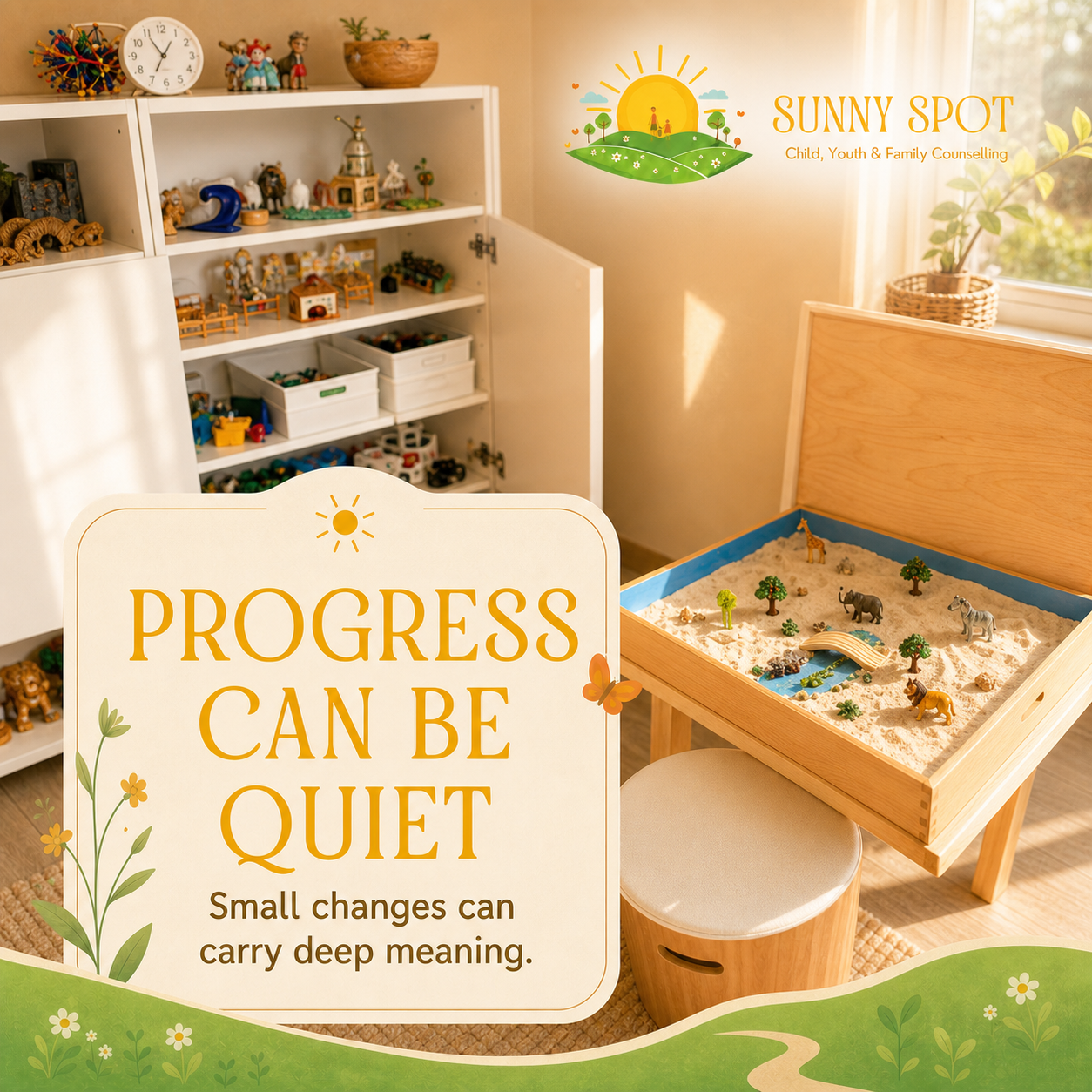
Progress in child counselling rarely looks like a straight line, and it is not always dramatic. It often shows up in small, quiet ways: a slightly easier morning, a meltdown that ends a little sooner, a child who can name a feeling instead of throwing it, or a moment of connection that felt out of reach before. Sometimes things look a little bumpier before they smooth out, as children start letting feelings surface in a safe place.
Every child moves at their own pace, and there is no set timeline. What we work toward is not a "fixed" child, but a child who feels more understood, more capable of handling big feelings, and more connected to the people who love them.
Taking the first step
If you think your child might benefit from support, a free 15-minute consultation is a gentle, no-pressure way to begin. You can share what is on your mind and get a feel for whether Sunny Spot is the right fit. You are also welcome to learn more about child counselling in Port Coquitlam or browse our FAQ for answers to common questions.
If you would like help preparing your child for that first visit, our guide on how to introduce counselling to your child offers gentle scripts, and you can read more about the play-based approach in understanding play therapy.
It is worth saying plainly: a first session that looks quiet, slow, or unremarkable is not a failed first session. Some children spend an entire first visit simply walking the perimeter of the room, opening and closing a box, or sitting beside Sheila without saying much at all. That is a child doing the careful work of assessing safety. A first session that ends with 'nothing happened' is often a first session that went exactly as it needed to.
This article offers general information and is not a substitute for individualized care. Your child's first session will be tailored to their unique needs, age, and comfort.
For things to try at home, explore our free parent resources for big feelings and worry.
If you are wondering what a first session might look like for your child, in-person child counselling at Sunny Spot's Port Coquitlam office welcomes families from Coquitlam, Port Moody and across the Tri-Cities.
Related services & support

Written by
Sheila Aini, MC, RCCRegistered Clinical Counsellor · Sunny Spot Child, Youth & Family Counselling
Sheila supports children, teens, parents and families through relationship-first, trauma-informed and neurodivergent-affirming counselling at Sunny Spot's Port Coquitlam office, welcoming families from Coquitlam, Port Moody and across the Tri-Cities.
Have Questions About Your Child?
Book a free 15-minute consultation to see if Sunny Spot is the right fit for your family.
Book a Free 15-Minute Consultation