
Helping Children With Big Feelings, Meltdowns and Emotional Regulation
Published July 21, 2026 • Updated August 30, 2026

Few things are as hard as watching your child come apart: the screaming, the sobbing, the flailing on the kitchen floor over something that seems small. In those moments it is easy to feel helpless, embarrassed, or frustrated. So let's start with something reassuring: meltdowns are not a sign that you are doing something wrong, and they are not simply your child "being difficult." They are a nervous system that has become overwhelmed and is asking for help.
Co-regulation comes before self-regulation
We often want children to "calm down" and manage their own feelings. But here is the developmental truth: children learn to regulate their emotions by borrowing our calm first. This is called co-regulation, and it comes before self-regulation. A child cannot access logic, coping skills, or problem-solving while their emotional alarm system is blaring. Your steady presence is what helps their nervous system settle, and it is only after that settling that any skill can actually land.
In other words, in the heat of a meltdown, your job is not to teach. It is to be the anchor. The lesson comes later, when the thinking brain comes back online.
Noticing the early cues
Most big feelings do not arrive without warning. There is usually a chain of small stressors earlier in the day: a noisy assembly, a tricky transition, a skipped snack, a friend who did not play the expected game. By the time the meltdown lands over a dropped crayon, the crayon is only the last straw. Learning to read the build-up helps you step in earlier, when regulation is still possible.
Watch for early body cues: a tightening jaw, faster breathing, a voice getting louder or very quiet, rigid thinking, or a child who starts refusing things they usually enjoy. These are invitations to lower the demand, not increase it. A snack, a quiet five minutes, fewer questions, or moving to a calmer room can change the trajectory. You will not catch every build-up, and that is expected. The aim is to notice more often, not perfectly.
What emotional overwhelm may look like at different ages
Big feelings do not look the same at every age, and recognizing the shape they take can help you respond in a way that fits your child.
Toddlers and preschoolers often show overwhelm through their whole body. They may drop to the floor, hit, throw, cling, or cry in a way that seems to come from nowhere. Their thinking brain is still very young, so words and explanations rarely land in the moment. Your calm physical presence is the main tool.
School-age children have more language, but they still lose access to it when flooded. Overwhelm may look like arguing, refusing, slamming doors, or getting rigid about small details. Some children become bossy or controlling as a way to feel safe when everything feels uncertain. They may also hold it together at school and release it at home.
Tweens and teens may withdraw, use sharp words, shut down completely, or disappear into a screen. Their reactions can look more adult, which makes it easy to forget that the nervous system underneath is still developing. Some need space before they can talk. Offering availability without demanding conversation often matters more than pressing for an explanation.
These are general patterns, not rules. Every child is different, and children with autism or ADHD may show overwhelm in ways that reflect their own sensory and processing needs. The aim is not to categorize your child, but to notice what overwhelm tends to look like for them so you can meet it earlier.
Connecting before correcting
When a child feels overwhelmed, connection is what opens the door back to calm. Before any limit or lesson, let your child feel that you are with them. You do not have to agree with the behaviour to stay present to the feeling underneath it. A child who feels met can begin to soften. A child who feels met with frustration alone often gets louder.
Connection can be quiet. Sitting nearby without a lecture, offering a hand if welcome, or simply breathing slowly beside them all count. Some children want a hug. Some need space but want to know you are close. Following your child's cues about closeness, rather than forcing a particular kind of comfort, helps them feel safe in the way that fits them.
What to do during a meltdown
When your child is in the thick of it, simple and steady wins. A few things that can help:
- Lower your body and voice: get down to their level and soften your tone.
- Keep words to a minimum: a flooded brain cannot process explanations.
- Name the feeling gently: "You are so upset. This is really hard."
- Offer safe presence: stay near, and let them know you are not going anywhere.
- Protect safety: calmly prevent hurt to people or things, without punishment in the moment.
Your calm is contagious, just like their distress. Slowing your own breathing is one of the most powerful things you can do. If you can steady yourself, your child has a regulated nervous system to borrow from.
Setting safe limits without shame
Holding a limit and holding a child are not opposites. You can stop a behaviour firmly and still be warm. "I will not let you hit. I am going to hold your hand so everyone stays safe. I can see how angry you are" keeps the limit clear while naming the feeling. The limit protects. The naming protects the relationship.
Avoid tying limits to a child's worth. Phrases like "good kids do not act like this" or "you should be ashamed" may quiet a child in the short term, but they tend to teach a child that their feelings, and maybe they themselves, are unacceptable. A limit that names the behaviour, not the child, leaves room for repair.
Phrases adults can try
When you are not sure what to say, short and steady phrases help more than speeches. A few you can keep in your back pocket:
- "I am right here with you."
- "This is really hard. I can see that."
- "You are safe. I am not going anywhere."
- "Your body is feeling so big right now. Let us help it settle."
- "I will not let you hit. I am going to stay close."
- "We can figure this out when your body feels calmer."
- "I love you even when you are having a hard time."
You do not need to say them perfectly. A calm tone and your presence matter more than the exact words. Over time, these phrases become a familiar language your child can lean on.
Responses that may increase shame
Some very natural reactions tend to pour fuel on the fire or leave a child feeling worse about themselves. As best you can, try to avoid:
- Reasoning, lecturing, or asking "why did you do that?" mid-meltdown
- Matching their intensity by raising your own voice
- Threats, bribes, or piling on consequences while emotions are peaking
- Dismissing the feeling: "stop crying, it is not a big deal"
- Labelling the child: "you are being bad" or "what is wrong with you"
- Comparing: "your sister never did this"
None of these mean you have failed if you slip. You are human, and repair matters more than perfection. If a shaming response slips out, a later "I should not have said that. I was frustrated, and I am sorry" teaches your child that adults can take responsibility too.
Repair afterward
Once the storm passes and everyone is calm, there is a beautiful opportunity to reconnect. Repair is where much of the learning actually happens. This might sound like, "That was a big storm. I am so glad we got through it together." You can gently reflect on what happened, wonder aloud about what might help next time, and remind your child that your love was never in question.
Keep repair light and curious rather than heavy. Asking a young child to explain themselves can feel like another demand. Instead, you might narrate what you noticed and invite a small next step: "I wonder if your body was tired and hungry. What do you think?" If you lost your own cool, a simple "I got loud earlier and I am sorry" models exactly the kind of accountability you hope to see.
Teaching later, when the brain is ready
Skills and problem-solving land best after the nervous system has settled, sometimes hours later or even the next day. Once your child is calm and connected, you can teach in small, playful doses. You might practice taking a slow breath together, name the feeling that came up, or read a story about a character who had a similar storm. The goal is not a lecture. It is to give your child words and tools they can reach for next time.
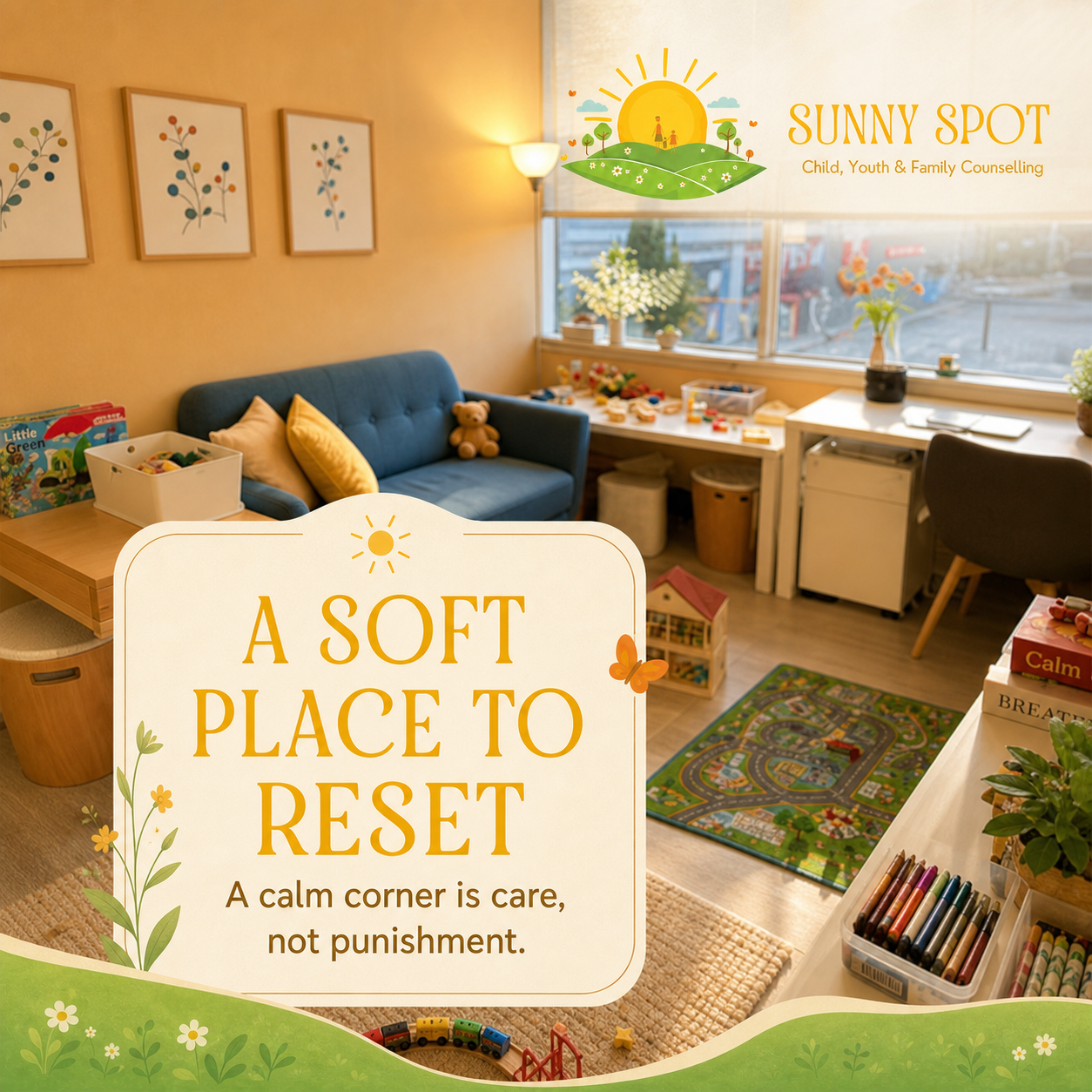
Children, including children with autism or ADHD, often benefit from concrete, visual, and sensory ways of learning about feelings. A feelings chart, a calm corner, or a simple hand signal for "I need a break" can give a child something tangible to use before words fail. Teaching these tools during calm moments means they are already familiar when the next big feeling arrives.
Playful connection builds regulation over time
Emotional regulation is not built during meltdowns. It is built in the ordinary, connected moments in between. Play is one of the best ways to strengthen it. Simple, low-pressure ideas include:
- Silly games that spark laughter and release tension
- Naming feelings during play with toys or drawings
- Cozy sensory activities like play dough, water, or blanket forts
- Special one-on-one time where your child leads the play
These moments fill your child's emotional cup and strengthen the connection they draw on when things get hard. A few minutes of child-led play each day can matter more than any single strategy in the heat of the moment.
When big feelings land after school
Many parents notice a puzzling pattern: their child holds it together all day at school and then falls apart the moment they get home. This is often called after-school restraint collapse, and it is not a sign that school is going badly. It is a sign that home is where your child feels safe enough to release the feelings they spent all day managing.
Holding in big feelings takes enormous energy. By pickup, a child's regulation reserves may be empty. The car ride, the walk home, or the first few minutes indoors can become the place all that stored tension pours out, often over something small.
- Offer a snack and a drink before asking about the day
- Keep the first half hour low-demand: fewer questions, no homework yet
- Build in quiet recovery time, such as resting, reading, or a sensory activity
- Name what you see gently: "Your body looks tired from a big day"
When this pattern is frequent and intense, it can be worth a gentle conversation with school about what the day demands of your child. A collaborative check-in about workload, transitions, or sensory load can lighten what your child carries home. The aim is not to remove challenge, but to make sure the demands fit what your child can manage.
If after-school meltdowns are a regular pattern, why big feelings may come home after school offers a practical decompression plan for the transition home.
When outside support may help
If big feelings are frequent, intense, or getting in the way of your child's daily life, and if they are leaving your whole family depleted, extra support can make a real difference. Counselling can offer your child a safe place to explore what is underneath the feelings, and offer you practical, personalized guidance. You can learn more about our emotional regulation and tantrums and meltdowns resources, explore parent coaching for support that centers your role at home, or read our article on why a calm corner is not a punishment. You can also book a free 15-minute consultation to talk it through.
This article offers general information and is not a substitute for individualized care. If you are ever worried about your child's safety, please contact your doctor, a crisis line, or emergency services right away.
For things to try at home, explore our free parent resources for big feelings.
When big feelings and meltdowns need a steadier place to land, in-person emotional regulation support at Sunny Spot's Port Coquitlam office welcomes children, teens and families from Coquitlam, Port Moody and across the Tri-Cities.
Related services & support

Written by
Sheila Aini, MC, RCCRegistered Clinical Counsellor · Sunny Spot Child, Youth & Family Counselling
Sheila supports children, teens, parents and families through relationship-first, trauma-informed and neurodivergent-affirming counselling at Sunny Spot's Port Coquitlam office, welcoming families from Coquitlam, Port Moody and across the Tri-Cities.


Have Questions About Your Child?
Book a free 15-minute consultation to see if Sunny Spot is the right fit for your family.
Book a Free 15-Minute Consultation