
Managing Big Feelings: Emotional Regulation for Young Children
Published April 22, 2026 • Updated August 24, 2026

When a child melts down, it can feel like the behaviour appeared out of nowhere. In reality, a meltdown is a nervous system that has become overwhelmed. It is not manipulation or defiance. It is a signal that a child needs support to return to calm. This article keeps things simple: a short sequence to reach for in the moment with younger children, and how to repair once everyone has settled.
Behaviour is communication
At Sunny Spot we believe "every child does well if they can." When a child struggles, we look beneath the surface behaviour to understand its function: the unmet need or lagging skill it is expressing.
A tantrum after school may be saying "I held it together all day and my tank is empty." A refusal at bedtime may be saying "I am scared of the dark and I do not have words yet." Looking for the need does not mean every behaviour is allowed. It means consequences and limits work better once a child is back in their thinking brain.
A simple in-the-moment sequence
When your younger child is flooding, you do not need a long plan. You need a short, repeatable sequence. Try these four steps:
- Get near and lower your own intensity. Move close, drop to their level, and slow your breathing. Your calm body is the first tool.
- Name what you see without judgment. "Your body is really worked up right now. This is hard."
- Offer one concrete anchor. A hand on a shoulder if welcome, a sip of water, feet on the floor, or a quiet "I am here."
- Wait for calm before teaching. Hold the limit gently, then save the lesson for later.
Skipping straight to "You will be fine" or a long explanation often makes the alarm louder. The sequence works because it meets the nervous system where it is, rather than asking a flooded child to think their way out.
Co-regulation comes first
Younger children especially cannot regulate on their own. They borrow your state. If you are tense and rushed, they feel it. If you slow down and soften, they have something to move toward. This is why your own regulation is not a side note. It is the intervention.
- Stay calm: your regulated body helps regulate theirs
- Connect before you correct
- Name the feeling out loud
- Wait for calm before teaching
- Reduce extra demands while the body is still recovering
In the heat of the moment, short phrases help more than speeches: "I'm here." "You're safe." "We can figure this out when your body settles."
Spotting the build-up before the peak
Most meltdowns do not arrive without warning. There is usually a chain of small stressors earlier in the day, a noisy assembly, a tricky transition, a skipped snack, a friend who did not play the expected game. By the time the meltdown lands over a dropped crayon, the crayon is only the last straw. Learning to read the build-up helps you step in earlier, when regulation is still possible.
Watch for early body cues: a tightening jaw, faster breathing, a voice getting louder or very quiet, rigid thinking, or a child who starts refusing things they usually enjoy. These are invitations to lower the demand, not increase it. A snack, a quiet five minutes, fewer questions, or moving to a calmer room can change the trajectory. You will not catch every build-up, and that is expected. The aim is to notice more often, not perfectly.
When the storm is at its peak
Sometimes you will miss the build-up and the storm arrives. That is normal. At the peak, less is more. Keep your voice low and your words few. If your child is safe, you do not need to fix anything in this moment. Your only jobs are to prevent harm and to stay present.
If your child is hitting or throwing, calmly block and hold the limit: "I will not let you hit. I am going to stay right here." You are not punishing. You are holding a safe boundary until the wave passes. Some younger children want to be held close during the peak. Others need space but want to know you are near. Follow their cues when you can.
Why younger children need this slower pace
Younger children are still building the brain wiring for managing feelings. Their thinking brain and their emotional brain are not yet well connected, so when a big feeling arrives, it tends to take over completely. This is development, not defiance. Expecting a three or four year old to reason through a meltdown asks something their brain cannot yet do.
This is why the sequence stays short and physical. Close presence, a low voice, and one simple anchor are about right for a young nervous system. As children grow, they can take on more of the regulation themselves, with your support. But in the early years, your calm body is the main tool, and that is more than enough.
Repair after the nervous system settles
The repair happens after the body has settled, not right after the crying stops. A child who has gone quiet may still be recovering internally. Give it a little time. Offer water, a snack, or a quiet cuddle. Wait until your child is genuinely soft and connected again before you revisit what happened.
Repair is where the relationship gets stronger and where the real learning lives. It tells your child that big feelings do not break the bond, and that they are still welcome after a hard moment. For many children, this is more powerful than any skill they could practice.
What repair can sound like
Keep repair warm and curious rather than heavy. A few examples:
- "That was a big storm. I am so glad we are back together."
- "I wonder if your body was tired and hungry. What do you think?"
- "Next time your body gets that big, we can try taking a slow breath together."
- "I got loud earlier and I am sorry. I was frustrated, and I am still here."
You do not need to make your child apologize in this moment. A forced sorry often teaches a child to say words they do not feel yet. When repair is genuine, children often offer their own version of making things right once they feel safe again.
Repair also does not need to happen perfectly every time. Some storms will end in a quiet cuddle and a snack, with no words at all. That counts too. What matters is that your child experiences, again and again, that the hard feeling passes and the relationship is still there on the other side of it.
What parents can practice between storms
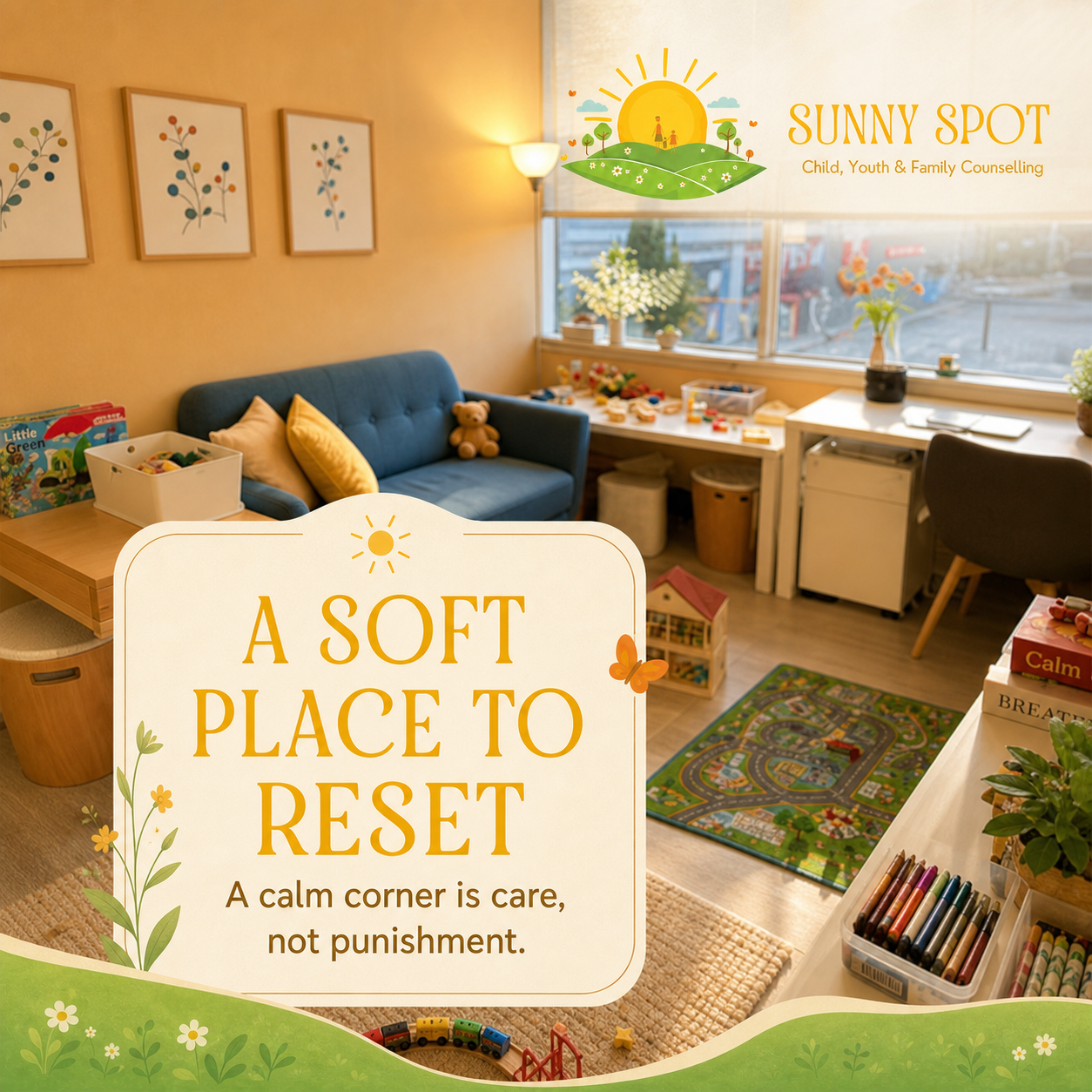
Regulation skills stick when they are practiced in calm moments: naming feelings in books, practicing slow breaths as a game, building a simple calm corner, and protecting sleep and food routines. Over time, children who are consistently co-regulated learn to self-regulate. For more, visit our Emotional Regulation and Tantrums & Meltdowns pages. You might also find our articles on big feelings needing a soft place to land and when big feelings come home helpful for the harder days.
Common questions in the moment
What if my child runs away?
If your child runs to another room, follow calmly if they are safe there, or guide them back to a safer space without turning it into a chase. Some children need physical distance to begin settling. Keep your voice low and your words few: I am going to stay nearby. You can come back when you are ready.
What if I am flooded too?
If your own body is racing, name it silently and take one slow breath before speaking. You are allowed to step back for a moment as long as your child is safe. A regulated caregiver is the intervention, so caring for your own state is not selfish. It is the work.
Is this letting them get away with it?
No. Waiting until the nervous system settles is not the same as dropping a limit. You can hold the boundary firmly and still offer calm presence. The teaching and any natural consequence come later, when your child can actually take them in. Regulation first does not erase responsibility. It makes responsibility possible.
This article offers general information and is not a substitute for individualized care. If you are ever worried about your child's safety, please contact your doctor, a crisis line, or emergency services right away.
For things to try at home, explore our free parent resources for emotional regulation and meltdowns.
When a young child's big feelings need gentle, relationship-first support, in-person child counselling at Sunny Spot's Port Coquitlam office welcomes families from Coquitlam, Port Moody and across the Tri-Cities.
Related services & support

Written by
Sheila Aini, MC, RCCRegistered Clinical Counsellor · Sunny Spot Child, Youth & Family Counselling
Sheila supports children, teens, parents and families through relationship-first, trauma-informed and neurodivergent-affirming counselling at Sunny Spot's Port Coquitlam office, welcoming families from Coquitlam, Port Moody and across the Tri-Cities.

Have Questions About Your Child?
Book a free 15-minute consultation to see if Sunny Spot is the right fit for your family.
Book a Free 15-Minute Consultation